

The choice between LoRaWAN and 4G depends on five main factors: power consumption, available coverage, data volume, device mobility and network ownership.
LoRaWAN generally works best for static devices that transmit small data packets at scheduled intervals and require long battery life, long-range communication or access to a private network. In contrast, 4G is usually more suitable for projects that require higher data volumes, frequent communication, mobility or direct cellular connectivity without deploying gateways.
Neither technology is universally better. The right choice is the one that meets the technical and operational requirements of each project.
What is LoRaWAN?
LoRaWAN is a Low Power Wide Area Network protocol designed to connect IoT devices that transmit small amounts of data over long distances while consuming little energy.
LoRaWAN devices communicate with one or more gateways using sub-GHz radio frequencies. These gateways receive the messages and forward them to a network server, which manages the devices, sessions and data routing.
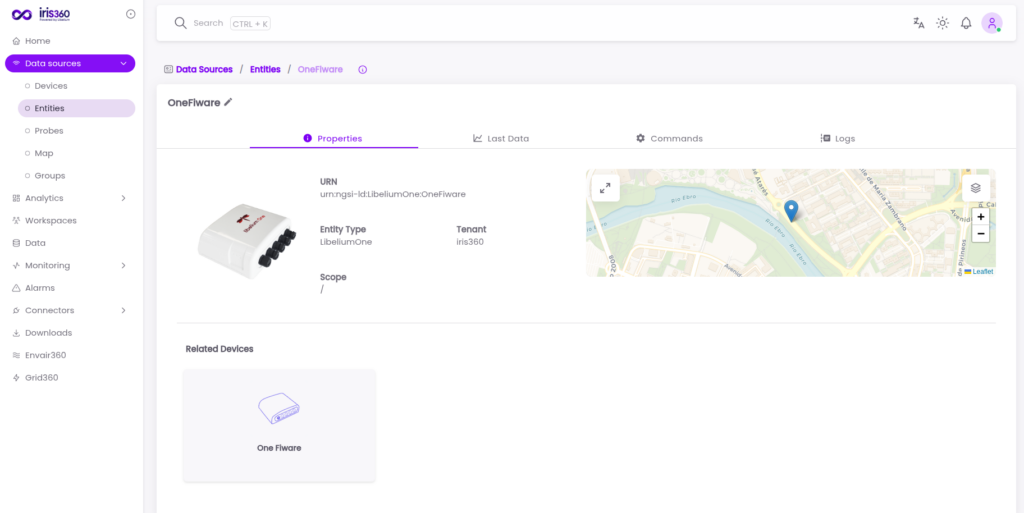
A LoRaWAN architecture usually consists of four layers:
- Sensors and devices installed in the field
- Gateways providing radio coverage
- A network server such as ChirpStack
- A management and visualisation platform such as iris360
LoRaWAN is particularly suitable for devices that remain inactive most of the time, take a measurement and transmit a compact data packet at scheduled intervals.
What is 4G connectivity for IoT?
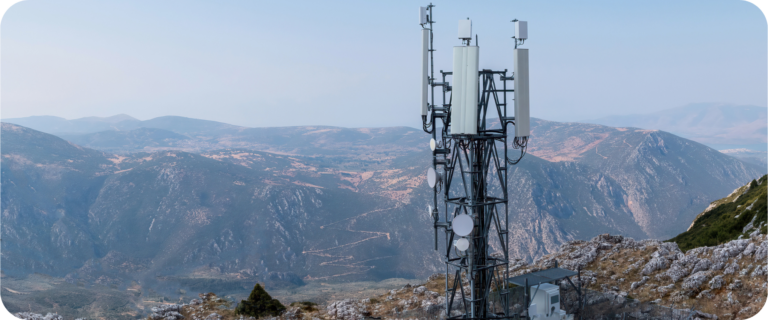
4G connectivity allows an IoT device to communicate directly through mobile operator infrastructure.
Each device includes a cellular modem and a SIM. Wherever cellular coverage is available, it can connect to the internet without installing gateways or maintaining a private radio network.
Cellular connectivity supports higher data volumes, more frequent communication and more immediate remote management. It can also support mobile devices and positioning services such as GNSS or A-GPS when these features are included in the hardware.
This architecture is particularly useful for projects distributed across different regions or countries, as well as installations where the customer does not want to deploy and operate a dedicated communications infrastructure.
Key differences between LoRaWAN and 4G
Decision factor | LoRaWAN | 4G |
Consumo de energía | Optimised for short, infrequent transmissions | Higher consumption due to establishing and maintaining a cellular connection |
Data volume | Small packets and compact telemetry | Larger payloads and frequent transmissions |
Cobertura | Requires an existing, public or privately deployed LoRaWAN network | Uses mobile operator coverage |
Infraestructura | May require gateways and a network server | Does not require private radio infrastructure |
Propiedad de la red | Enables organisations to operate a private network | The network is operated by the mobile provider |
Movilidad | Primarily recommended for static nodes | Suitable for fixed and mobile devices |
Gestión remota | Subject to LoRaWAN downlink availability and scheduling | Una comunicación remota más directa e inmediata |
Updates | Must be adapted to LoRaWAN network limitations | Suitable for updates and operations involving larger data volumes |
Signal penetration | Good propagation in indoor, basement and obstructed locations | Depends on cellular coverage at the installation site |
Scalability | One infrastructure can support many devices | Each device uses its own cellular connection |
Which technology consumes less energy?
LoRaWAN generally consumes less energy than 4G when a device transmits small data packets at widely spaced intervals.
A LoRaWAN transmission can be completed without maintaining a prolonged cellular session. The device can remain in sleep mode most of the time and activate its radio only when it needs to send or receive information.
With 4G, the modem must register with the cellular network, establish communication and handle more signalling. This process provides greater capacity and flexibility, but it also usually requires more energy.
Actual battery life does not depend solely on the communications technology. Other factors include:
- Sensor reading frequency
- Transmission interval
- Message size
- Coverage quality
- Number of retries
- Use of downlink communications
- Consumption of connected sensors
- Temperatura ambiente
- Battery chemistry and capacity
Battery life cannot therefore be calculated simply by knowing whether the project uses LoRaWAN or 4G. It must be estimated using a specific operating profile.
Which technology offers greater range?
LoRaWAN is designed to provide long-range communication using sub-GHz frequency bands. Under suitable conditions, it can connect devices located several kilometres away from a gateway.
The actual range depends on factors such as:
- Gateway height and location
- Line of sight
- Terrain
- Buildings and other obstacles
- Radio interference
- Network configuration
- Frequency band
- Transmission power permitted in each region
4G coverage, on the other hand, depends on the infrastructure deployed by mobile operators. In urban environments and areas with good cellular service, it can provide immediate coverage without additional equipment.
In rural, underground or industrial locations, or wherever cellular service is insufficient, a private LoRaWAN network can provide greater control over service availability. The customer can decide where to install the gateways and design the network around the project’s specific conditions.
Do I need gateways to use LoRaWAN?
Not always. There are three main ways to deploy a LoRaWAN solution.
Some municipalities, industrial companies and other organisations already operate LoRaWAN gateways.
New devices can be added to this existing infrastructure. This protects previous network investments and avoids deploying a separate network for every application.
Before installing the devices, the organisation should verify coverage, available capacity and compatibility with the network server.
A project can include one or more gateways to provide coverage wherever it is required.
This model allows the organisation to control:
- Gateway location
- Coverage area
- Infrastructure maintenance
- Network availability
- Network server
- Gestión de dispositivos
It is a common option for farms, industrial facilities, forests, basements and remote locations without suitable cellular service.
Where commercial coverage is available, the project can purchase connectivity as a service.
This approach avoids the installation and maintenance of private gateways. However, coverage, service conditions and availability must be verified for each country and location.
Does LoRaWAN work indoors or underground?
The sub-GHz frequency bands used by LoRaWAN support signal propagation and penetration through common building materials.
This characteristic can help connect sensors installed in:
- Basements
- Utility rooms
- Water networks
- Buildings
- Industrial facilities
- Car parks
- Partially underground spaces
However, no wireless technology can guarantee coverage without a prior assessment.
Walls, metal structures, machinery, installation depth and antenna position can significantly affect the radio link. Strategic gateway placement makes it possible to design a network around these conditions.
When should you choose LoRaWAN?
LoRaWAN is generally the most suitable option when a project meets several of the following conditions:
- Devices are primarily static
- Small data packets are transmitted
- Communications take place at scheduled intervals
- Battery life is a priority
- A LoRaWAN network is already available
- The organisation wants to deploy a private network
- Cellular coverage is insufficient
- Sensors are installed indoors, underground or in remote locations
- A large number of devices must share a common infrastructure
Smart agriculture
Agricultural projects often distribute sensors across large areas and in locations without access to the power grid.
LoRaWAN can connect devices that monitor soil moisture, temperature, solar radiation, rainfall, wind and crop conditions using scheduled, low-power transmissions.
Water management and water quality
Sensors can be installed in reservoirs, channels, rivers, distribution networks and remote locations.
When measurements are transmitted periodically and do not involve large data volumes, LoRaWAN can reduce power consumption and make it easier to create dedicated coverage.
Industrial facilities
A private LoRaWAN network can connect environmental or operational sensors in plants, warehouses, basements and other areas where cellular service is insufficient or dependence on an external operator is not desirable.
Ciudades inteligentes
Municipalities that already operate LoRaWAN infrastructure can add new sensors without purchasing a separate cellular connection for each device.
This allows the network to be reused across different urban applications while centralising device management.
When should you choose 4G?
4G connectivity is usually preferable when the project requires:
- Frequent transmissions
- Higher data volumes
- Direct IP communication
- Continuous remote management
- Firmware updates
- Mobile devices
- GNSS or A-GPS positioning
- Deployment across different countries
- Operation without an available LoRaWAN network
- Avoidance of gateway installation and maintenance
When a project involves a small number of devices installed far apart, deploying LoRaWAN gateways may not be efficient.
4G allows each device to communicate directly wherever suitable cellular coverage is available.
Devices that change location must maintain connectivity while moving between different coverage areas.
Cellular networks are designed to support mobility and handovers between cells, making them more suitable for mobile assets.
When the project requires regular parameter changes, immediate alerts or firmware updates, 4G provides greater capacity for exchanging information with the device.
Is LoRaWAN cheaper than 4G?
Costs cannot be compared solely on the basis of the communications technology.
With 4G, costs are generally associated with the SIM, data plan and mobile operator service for each device.
With LoRaWAN, the cost depends on the deployment model:
- An existing network can reduce the need for new infrastructure
- A private network requires gateways, installation and maintenance
- A public network may charge a fee per device or service
Device density is an important factor. A private LoRaWAN network can be particularly cost-effective when the same infrastructure supports a large number of nodes concentrated within one area.
A proper comparison should consider the total cost of ownership, including connectivity, gateways, installation, maintenance, energy consumption and field visits.
Is LoRaWAN connectivity secure?
LoRaWAN uses network and application security mechanisms based on AES-128.
The effective security of a project also depends on the correct management of:
A private network allows an organisation to control a larger part of the infrastructure directly. Meanwhile, 4G connectivity relies on the authentication and security mechanisms provided by the cellular network.
In both cases, the complete architecture should be assessed from the sensor to the platform where the data is stored and used.
- Frequent transmissions
- Higher data volumes
- Direct IP communication
- Continuous remote management
- Firmware updates
- Mobile devices
- GNSS or A-GPS positioning
- Deployment across different countries
- Operation without an available LoRaWAN network
- Avoidance of gateway installation and maintenance
Libelium One: connectivity adapted to each project
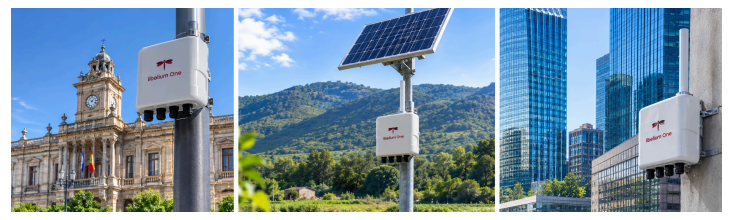
Libelium One connects sensors for water management, industrial digitalisation, agricultural monitoring and smart city applications.
The product family is available with two connectivity models.
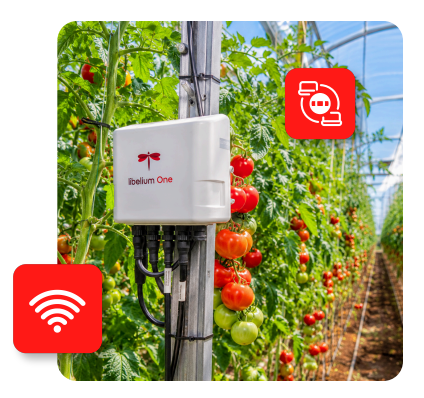
Libelium One LoRaWAN is designed for compact telemetry, low-power communication, long-range coverage and private, public or existing LoRaWAN networks.
The integration of ChirpStack with iris360 centralises device provisioning, message routing and data management within the same ecosystem.
Libelium One 4G is designed for projects requiring higher data volumes, frequent communication, mobility or direct cellular connectivity.
Its global SIM facilitates deployments across different countries without installing private gateways or managing separate local operator agreements for every location.
Both options maintain sensor integration and data management through iris360. The choice depends on battery life, coverage, transmission frequency, mobility and available infrastructure.
Checklist: LoRaWAN or 4G?
Before selecting the connectivity model, answer the following questions:
- How much data does each device generate?
- How frequently must this data be transmitted?
- Are the devices fixed or mobile?
- Is cellular coverage available at every location?
- Is there an existing LoRaWAN network that can be reused?
- Does the organisation want to operate a private network?
- How many devices will be installed in each area?
- What battery life does the project require?
- Will remote firmware updates be necessary?
- How frequently will the configuration need to be changed?
- Will the devices be installed indoors or underground?
- What is the total cost of installation, connectivity and maintenance?
One platform, two connectivity models
LoRaWAN and 4G address different requirements.
LoRaWAN prioritises low power consumption, compact telemetry, long-range communication and the option to operate a private network. 4G prioritises bandwidth, mobility, direct communication and deployment without private radio infrastructure.
With the expanded Libelium One family, each project can start with the connectivity model it actually needs.
Download the LoRaWAN vs 4G guide and compare the main decision criteria.
Discover Libelium One LoRaWAN.
Need help validating your project architecture? Talk to a Libelium specialist.
Behind the Change.
Beyond the Challenge.