
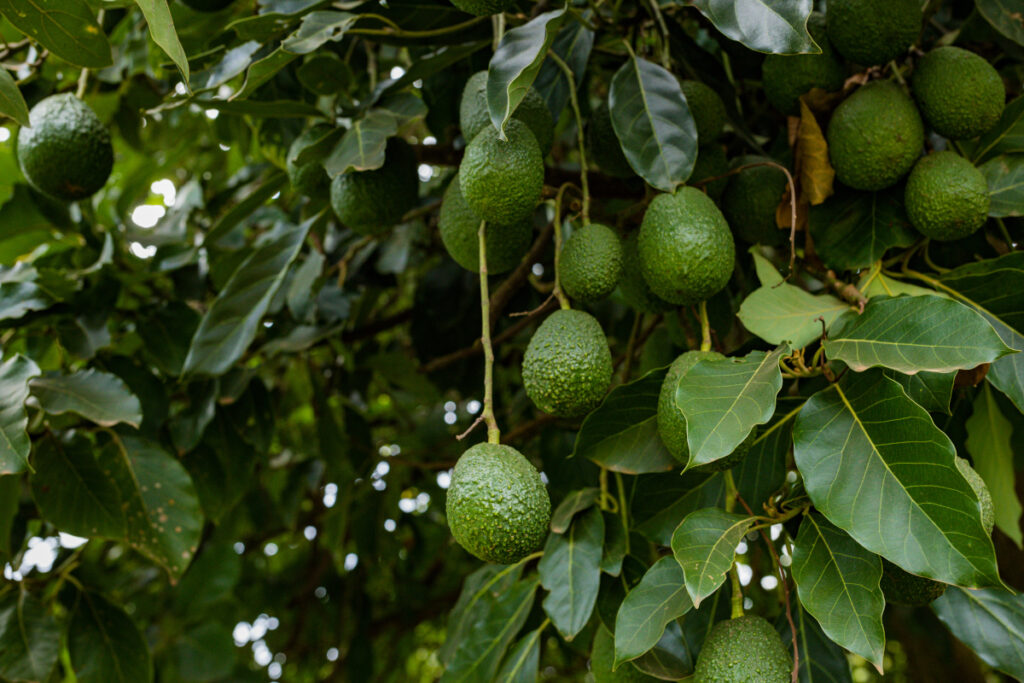
Avocado has become the cultural symbol of a generation who cares about the planet, so its production faces unprecedented scrutiny.
It’s not just about having tasty fruit or a picture-perfect avocado toast anymore. Now, consumers, regulators, and investors want to understand the environmental cost of that food by having a ESG report in a click.
Until today, agriculture has struggled with uncertainty and increasing climate and regulatory pressure.
Weather conditions have changed. This has made farmers adapt by combining their traditional knowledge with new technology. They are now using smart agriculture, which includes the use of artificial intelligence.

The challenge:
Climate change is challenging traditional farming techniques
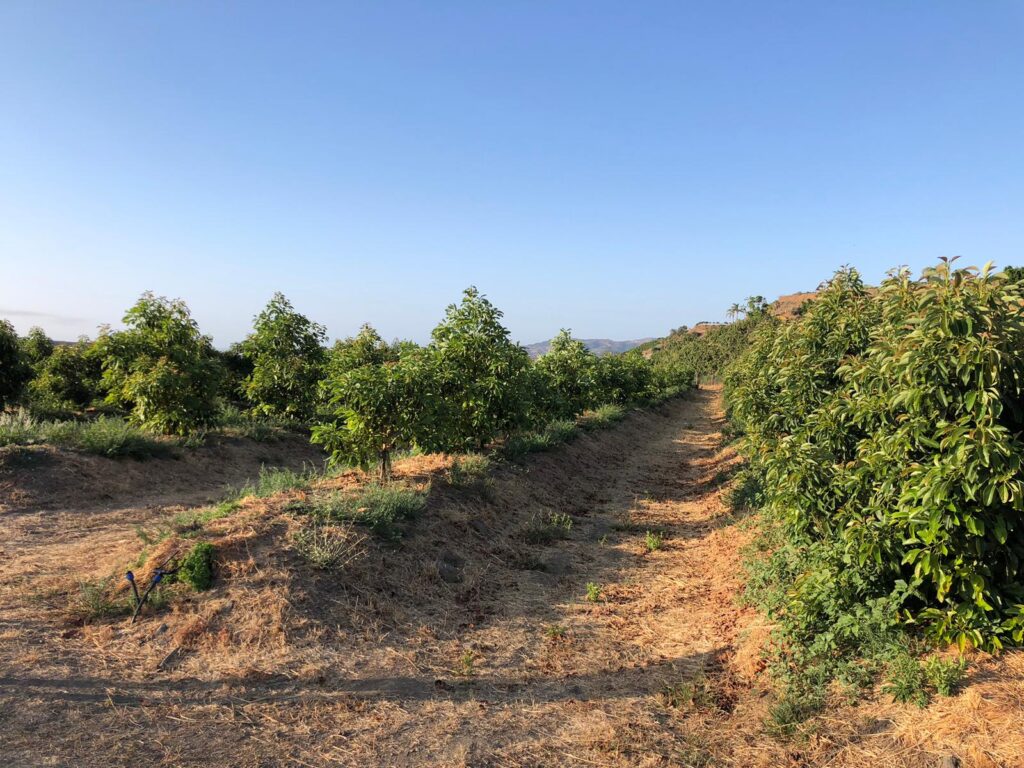
Now, in addition, farmers and agricultural companies must monitor the environmental impact of their crops.
These measurements are based on theoretical estimates, regional averages, and spreadsheets that aim to simplify the vast complexity of nature.
But at Libelium we know that behind the change is the real data, and beyond the challenge is applied intelligence.
Together with the TROPS agricultural cooperative in Málaga, MetaWorldX and Penn State University, we have developed GreenTwin, a project that, in addition to monitoring the field, creates a bridge of certainty between the muddy boot and the ESG report.
The architecture uses IoT + AI + Digital Twins to offer the farmer
GreenTwin is a digital twin for agriculture, tailored to an avocado and mango crop. This project demonstrated that technology transforms data into applied intelligence, performing as a true “Low Emission Zone” for the field.
The architecture uses IoT + AI + Digital Twins to offer the farmer:
- Deep integration: Deployment of air and soil quality sensors (PM, CH₄, NO₂, etc.). An algorithm acts as a “digital judge” that, by comparing real-time data with environmental conditions (wind, simulation), separates the noise (natural emissions) from the signal (human activity).
- Risk-free prediction: The simulation layer, unique to iris360, allows data managers to model scenarios in a virtual 3D environment: “What happens if we change this fertilizer?”. This allows optimizing processes and saving costs, in addition to, of course, knowing the crop’s carbon footprint.
Behind the Change
Reducing the Risk of "The Good Guess"
You go to the supermarket, choose the avocado you like best, scan the QR code attached to it, and see a real figure on your mobile screen of the carbon footprint its cultivation has emitted. This project leaves product traceability one step away from being reality.
What is missing for it to be real?
For a Director of Innovation or a Head of Sustainability in the agricultural sector, the current scenario is a nightmare of compliance requirements for CAP subsidies and ESG reporting for agriculture. Agriculture is responsible for a significant portion of greenhouse gas (GHG) emissions, but how much does a mango plot in the Axarquía of Málaga exactly emit?
The problem largely lies in the inability to distinguish the signal from the noise:
- The trap of estimates: Currently, for ESG compliance and esg reporting for agriculture, generic emission factors are used that do not distinguish between an efficiently managed crop and one that is not. This penalizes the most innovative producers.
- The noise of nature: Plants, due to their own physiology, emit Volatile Organic Compounds (VOCs). Without the appropriate technology, these can be confused with pollutants derived from human activity, artificially inflating the operation’s carbon footprint.
- The lack of interoperability: Data on soil, climate, and machinery often reside on separate platforms. Without a unified vision, decision-making is reactive, never predictive.
This is where our idea comes in: from data to intelligence . We sell sensors; we sell the ability to eliminate uncertainty for smart agriculture with AI.
GreenTwin, the agricultural "Low Emission Zone"
GreenTwin is not a visualization platform as usual. It is an intelligence ecosystem that replicates physical reality in a high-fidelity 3D digital environment. To achieve this, we have deployed an architecture that combines our 20-year hardware legacy with the power of AI and data spaces, delivering a true digital twin for agriculture.
GreenTwin’s Technological Architecture
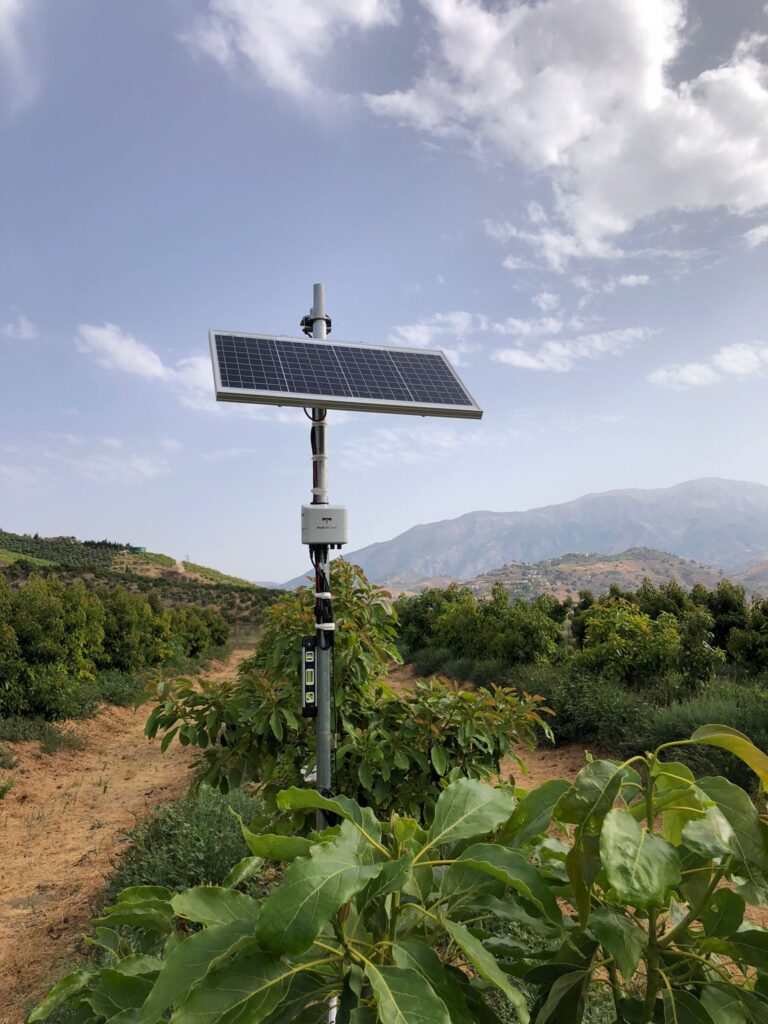
We deploy Libelium One nodes and Smart Spot stations strategically distributed. These stations act as sentinels that measure:
- Air Quality: Particles (PM1, PM2.5, PM10), CO₂, NO₂, NH₃, and CH₄ (methane).
- Soil Health: Humidity, temperature, and conductivity, essential to understanding how the soil retains or releases gases.
Data is sent to iris360 to apply intelligence to the data through algorithmic models.
Beyond the Challenge
An AI Auditor Against Confusion
Data is nothing without context. Once the information on air and soil quality parameters reaches iris360, an advanced algorithm that acts as a digital auditor is applied. The algorithm cross-references sensor data with chemical transport models (like CHIMERE) and real-time meteorological data.
The result? The unique ability to separate “human” emissions (the passage of a tractor, the application of a fertilizer) from “natural” ones (the tree’s respiration).
This clusterization has been successfully tested in environments as complex as the construction of The Line, in Saudi Arabia, where it was applied to differentiate the exact sources of contamination (port, sand, or construction contamination).
iris360: Predicting the Future Before it Happens
At Libelium, we don’t write for those looking for a datasheet; we write for leaders seeking to reduce risks. That is why the heart of GreenTwin is its integration with iris360.
Imagine you are the manager of TROPS. Thanks to the Digital Twin, you can simulate scenarios:
- “What impact would changing my tractor fleet to electric models have on my ESG report?”
- “How would ammonia emissions vary if I adjust the fertilization schedule according to the relative air humidity?”
The digital twin, or Digital Twin, becomes a fundamental tool for precision agriculture, as its capacity to simulate and faithfully reflect crop conditions allows for constant enrichment with a wide range of use cases and critical variables. As a digital twin for agriculture, it enables risk-free testing before field execution.
Expansion of the digital twin with more use cases:
- Nutrient and fertilizer management: The purchase and use of fertilizers are monitored and simulated, analyzing not only the quantity applied but also the type (organic, chemical), the moment of application, and the impact on soil health and crop yield. This allows optimizing dosages and reducing the associated environmental footprint.
- Water efficiency and irrigation management: The digital twin models irrigation water consumption, integrating data from soil moisture sensors, weather forecasts, and the plant’s specific water demand in its different phenological phases. Simulation helps schedule precise irrigation, avoiding water stress or resource waste.
- Monitoring of fruit or leaf development: Includes the simulation and tracking of fruit or leaf growth, allowing farmers to anticipate harvests, detect growth anomalies (related to pests, diseases, or nutritional deficiencies), and predict the final yield.
- Climate impact and microclimate: Real-time data on temperature, solar radiation, wind speed, and relative humidity are incorporated, simulating the exact microclimate within the plot and its direct effect on biological variables.
Enriched crop management for smart agriculture with AI
The integration of these multiple use cases into the digital twin not only increases the model’s accuracy and detail but also significantly enriches crop management by reducing uncertainty.
It allows farmers to:
- Make data-driven decisions: Substituting uncertainty with verifiable and predictive information.
- Resource optimization: Maximizing efficiency in the use of inputs like water, fertilizers, and energy.
- Sustainability: Evaluating the impact of agricultural practices and facilitating compliance with ESG criteria (Environmental, Social, and Governance), such as emissions reduction or responsible water use.
- Predictive analysis: Simulating future scenarios (e.g., what would happen if I delay irrigation?) to minimize risks and maximize profitability.
It is applied intelligence that transforms sustainability from a cost center into a profitability engine.
Impact and ROI: Beyond Ethics, Profitability
Let’s talk about tangible benefits. GreenTwin has demonstrated impact across three critical axes:
Input Optimization (Immediate Payback)
The system detected peaks of nitrogen gases immediately after fertilization. This allowed the cooperative’s technicians to adjust the exact dose and the ideal moment for fertilization. Less chemical product waste means lower costs and healthier soil. It is pure budgetary efficiency.
Scientific Evidence for ESG Reporting
With the entry into force of increasingly strict regulations (such as the CSRD in Europe), companies need proof, not promises, especially for esg reporting for agriculture. GreenTwin provides an auditable data trail . By distinguishing natural VOCs from mango from operational emissions, we protect the producer from unfair penalties and grant them a powerful negotiating tool with large distribution networks.
Urban Health and Political Legacy (B2G)
For public administrations, this model is replicable in the management of urban green areas. It allows for the creation of more livable cities and demonstrates, with data in hand, how urban green infrastructure acts as a real filter against pollution, improving citizens’ health and optimizing the maintenance budget.
The Future of “Green Gold”: From the Field to the Supermarket
Current culture does not forgive a lack of transparency. The avocado is the fruit of millennials, a demographic group that reads labels and seeks brands with purpose.
Thanks to GreenTwin, the future we propose is one where the consumer can scan a QR code on their fruit tray and see, not a stock photo of a smiling farmer, but the Digital Twin of the farm where that avocado grew. A real, data-based certification that the product was cultivated by optimizing every drop of water and minimizing every gram of CO₂.
“We have brought the technology we use to measure pollution in cities to the field. It’s not just about installing sensors, but about giving farmers the tools to move from theoretical estimates to real data.” —says Alicia Asín, CEO of Libelium
This real measurement capability eliminates theoretical estimates and offers a data-driven decision model that benefits both producers and consumers. The technology is ready to help farmers optimize resources and demonstrate compliance with green regulations to receive CAP (Common Agricultural Policy) subsidies, while streamlining esg reporting for agriculture.
We are closer to having that QR on the avocado that assures us that our favorite breakfast is sustainable, generates local wealth, is packed with nutrients… and, moreover, is delicious!