

One IoT node. Two connectivity options.
Dozens of configurations.
Libelium One integrates sensors for water management, industrial digitalisation, agricultural monitoring and smart city applications. Available with 4G or LoRaWAN connectivity, it allows each project to adapt power consumption, coverage and communications architecture to its technical requirements.
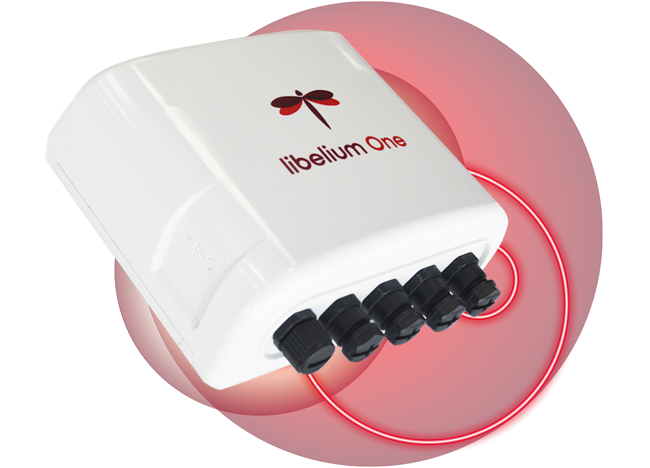
What Libelium One Brings to a Deployment
High-performance engineering designed for harsh industrial, urban and agricultural field deployments.
30+ Integrated Sensors
Connect water, agriculture, weather, noise and environmental sensors through native digital twins.
4 Sensor Connections
Combine different parameters and applications in one node.
4G or LoRaWAN
Choose global cellular connectivity or low-power long-range communications.
No-Code Configuration
Automatic sensor detection and remote configuration through a cloud-based engine.
Standard Protocols
Use technologies such as HTTPS and MQTT and integrate with leading cloud platforms.
International Coverage
One 4G supports global cellular connectivity through a global SIM in more than 100 countries.
Outdoor-Ready
IP66, IP67 and IP68 protection, IK9 impact resistance and operation between -20 °C and +50 °C.
Certified
CE-RED, FCC, UKCA and IC-ISED according to variant and region.
Technology that cares
We want to guarantee food security, protect the ecosystems and ensure sustainable use of water. But we can only make the best decisions if we base them on the best data.
Libelium has paid attention to these defying challenges to assure agrifood security, protect ecosystems and ensure sustainable water use.
We deserve a technology that cares. Libelium One has been designed for continuous monitoring of a huge range of parameters covering the most relevant IoT applications.

Interoperability, ease of use and sustainability, all in One solution
Interoperable
Different software systems linked up with one another, making automated data sharing possible. Interoperability is the key factor in this new era of datacratization (taking action based on data).
Easy to use
With a simple configuration you can manage the data in real-time from Libelium Cloud.
Sustainable
Libelium One is ready to work in every type of environment and has been designed taking into account the 5 Rs compliant.
No results match your search.
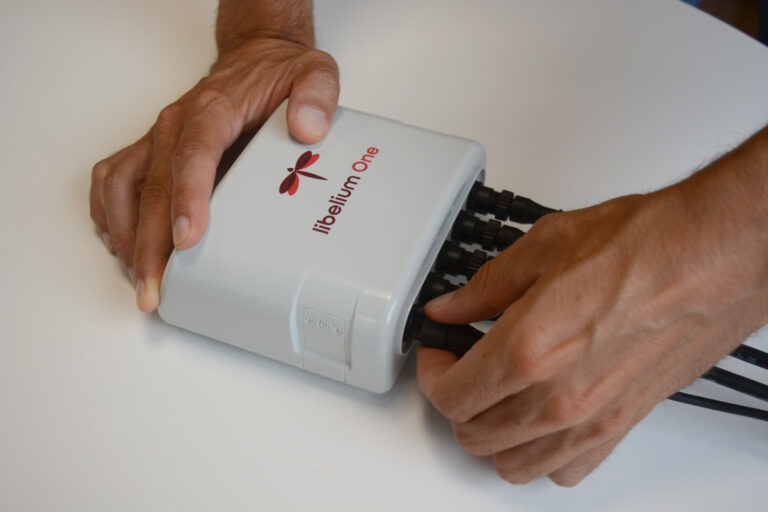
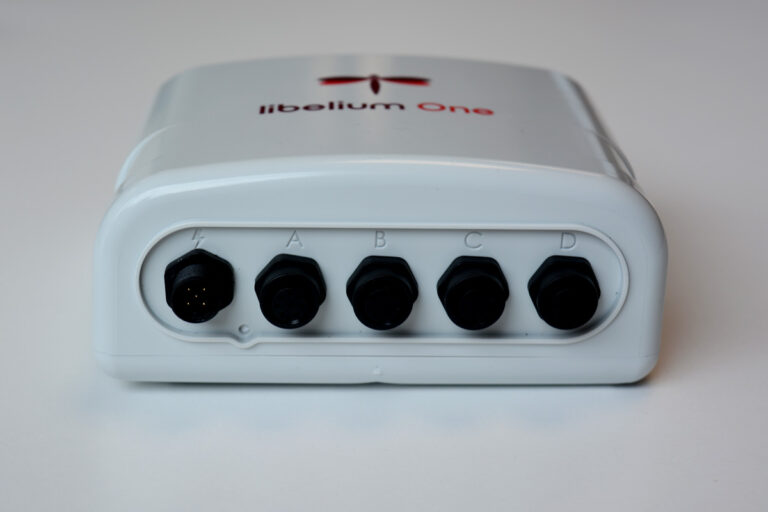
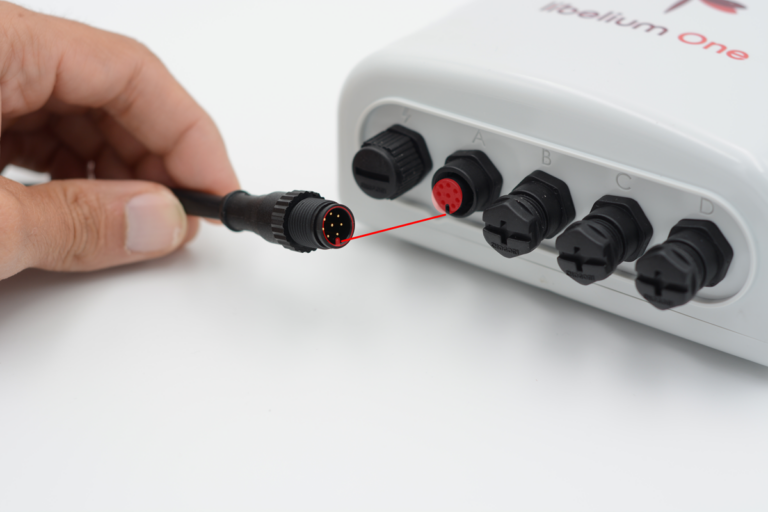
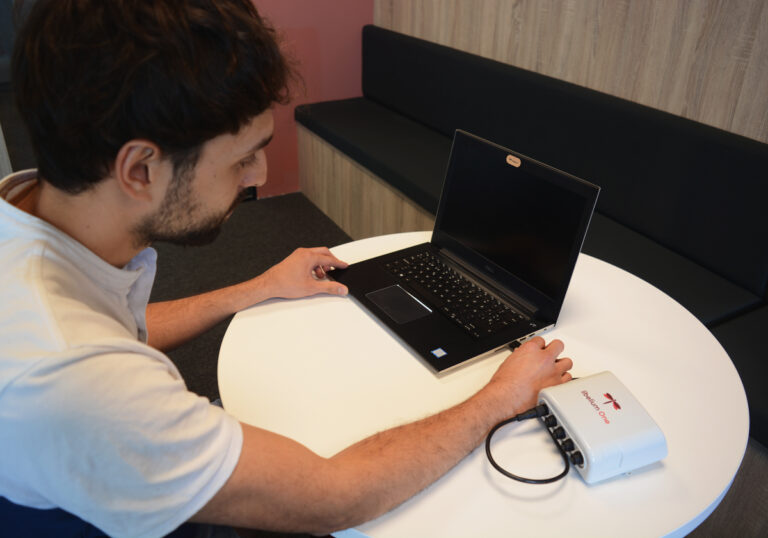
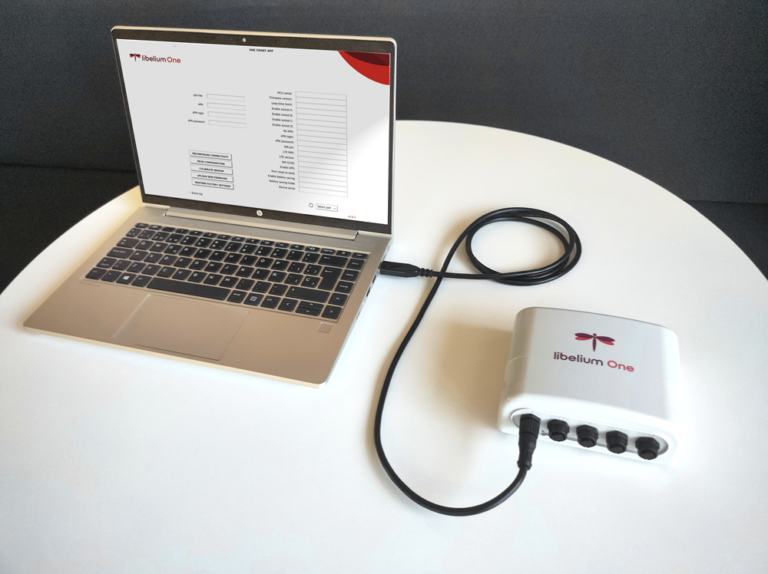
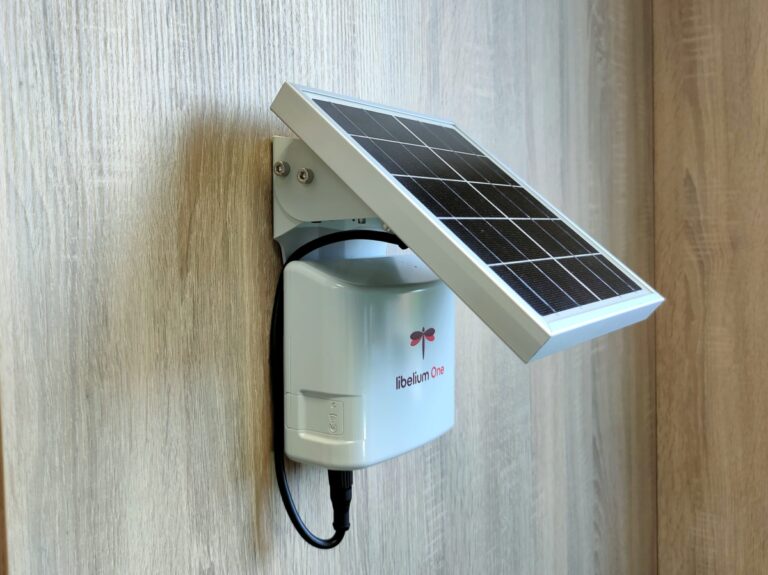

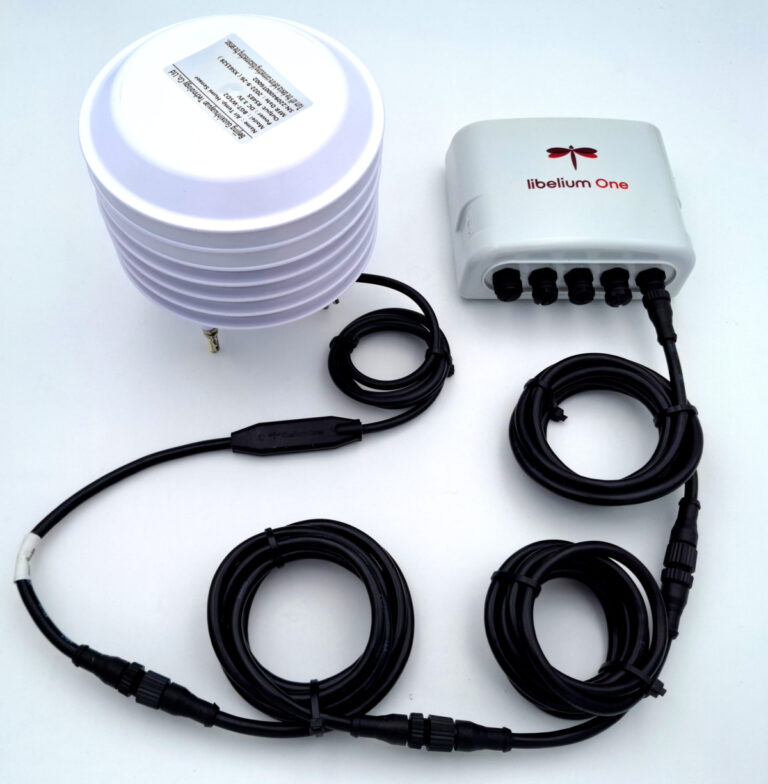

Discover how IoT technology works in favor of the Sustainable Development Goals (SDGs) and projects have been deployed worldwide according to each objective.
Project funded by the European Union
The project aims to develop an interoperable and universal IoT gateway, for automatic sensor connection and sending their data to the cloud. The results have been the creation of the One platform as a complete solution for IoT deployments in any vertical, obtaining the required interoperability and universality.
The way is crystal clear. Only follow these 4 steps.
Identify your One device and access all its connected sensors’ information
In this section, you can identify the One main node and the sensors you have already connected to it (up to 4) with their references and the serial number. In this same Info section, you can check the Battery Status. You will receive alerts on battery level and more information about what is happening with the battery of your device.
Find all HW-related information status of your device
You can see in green light the sensor that is connected to each socket and in red the sockets that are not being used. One of the most interesting facts about this section is that you can manage the sockets from here and to save battery you can choose whether to enable or disable any socket. To sum up all the parameters you can configure here are: Enable socket X: If a socket is not going to be used, disable it to save power. Enable GNSS: This parameter controls the geolocation feature of the node. If it is not needed, it can be disabled to save battery.
Configure specific settings of your Libelium One device
In this section you can modify the following parameters: Loop Time: Sets the time between sensor readings. It can be set from 5 minutes to 24 hours. Number of loops to send: Sets the number of loops that will be sent together. This is useful for saving power in applications where immediate readings are meaningless, sending a batch of readings at one time instead of single readings. It can be set from 1 to 10. Here you will see and manage how often the data is sent to the cloud. For instance, if the loop time is 15 mins and the Number of loops to send is 4, then you will see on the dashboard that you receive 4 new measures every hour. The higher the time between sending loops, the smaller the battery consumption.
Enjoy real-time information in an easy & understandable dashboard
This is one of the newest features of our Cloud where you can find the latest data of each sensor. Here you can find 1 card per parameter showing the last value received and an arrow indicating the trend for a quicker and simpler process allowing you to take action if required.
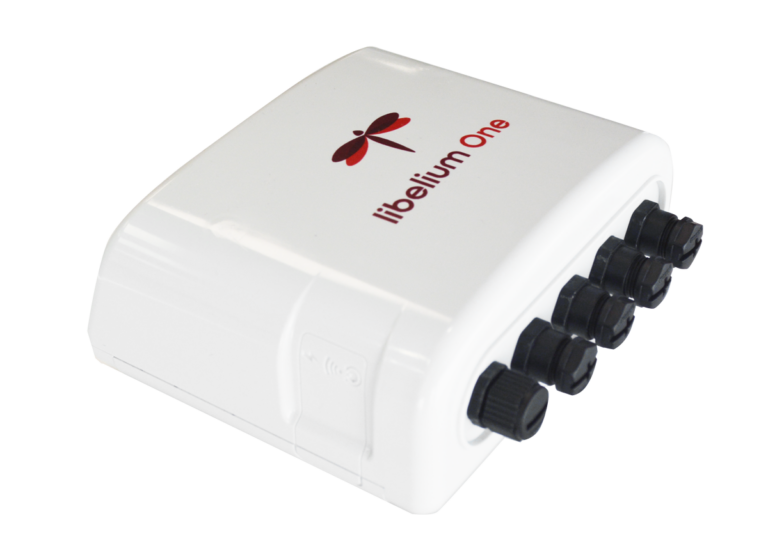
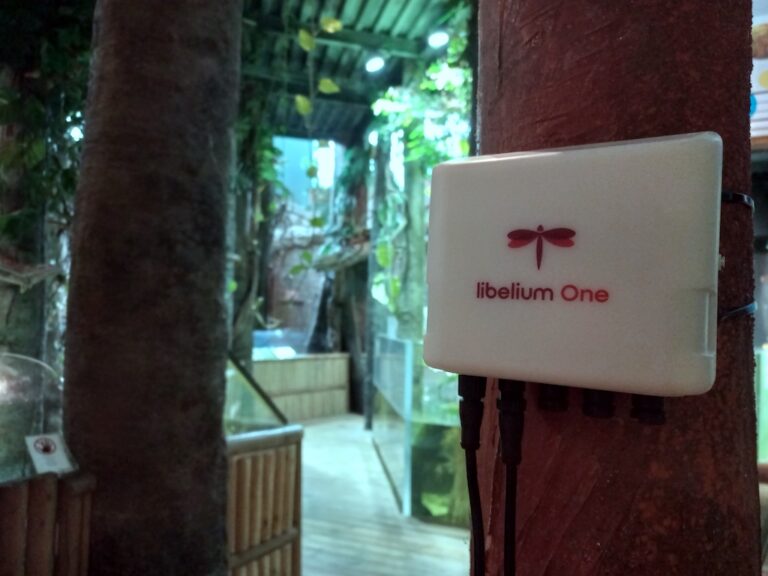
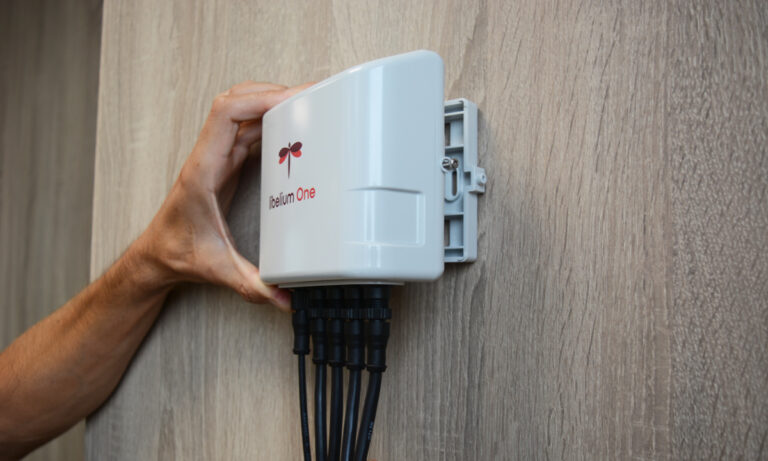
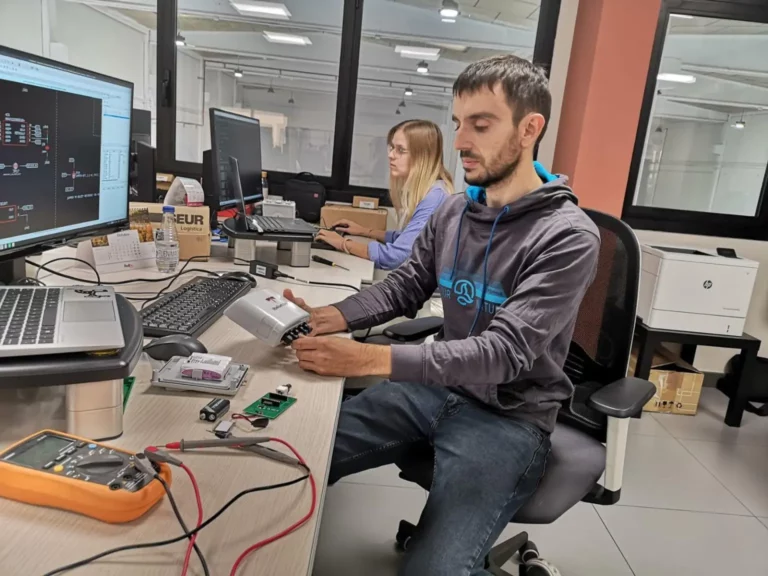

One IoT device for different environments
Libelium One can be configured with application-specific sensors while maintaining a common device, connectivity and data-management architecture.
Water management
Monitor water quality, level, flow and physical-chemical parameters across networks, water bodies and installations.
Industrial digitalisation
Remotely monitor facilities, infrastructure and environmental conditions in industrial environments.
Agricultural monitoring
Measure soil moisture, weather conditions, crop status and water availability.
Smart cities
Monitor environmental conditions, noise, weather and other urban parameters.
Choose the connectivity your IoT project needs
One LoRaWAN and One 4G share sensor integration and the management ecosystem. The difference lies in the communications model and network infrastructure.

From field sensors to operational data
Toggle the connectivity mode to see how the communications route changes from Libelium One to the platform.
Field sensing
Up to 4 connected sensors capture physical parameters at the deployment site.
Field sensing
What happens
Digital and analog sensor probes are read on a scheduled sampling cycle.
Libelium One capabilities
Automatic sensor detection, native digital twins and remote sampling configuration.
Output
Calibrated measurements queued for transmission.
Digital and analog sensor probes are read on a scheduled sampling cycle.
Automatic sensor detection, native digital twins and remote sampling configuration.
Calibrated measurements queued for transmission.
Connectivity
4G or LoRaWAN transmits encrypted payloads to the network.
Connectivity
What happens
Payloads travel over public cellular coverage or a LoRaWAN network depending on the variant.
Libelium One capabilities
Dual connectivity option, global SIM for 4G and private-network support for LoRaWAN.
Output
Encrypted data delivered to the platform ingestion endpoint.
Payloads travel over public cellular coverage or a LoRaWAN network depending on the variant.
Dual connectivity option, global SIM for 4G and private-network support for LoRaWAN.
Encrypted data delivered to the platform ingestion endpoint.
iris360 platform
Data is normalised, stored and made available for visualisation and analysis.
iris360 platform
What happens
Ingested measurements are standardised on FIWARE NGSI-LD data models.
Libelium One capabilities
Device management, dashboards, threshold alarms and historical storage.
Output
Structured, queryable operational data.
Ingested measurements are standardised on FIWARE NGSI-LD data models.
Device management, dashboards, threshold alarms and historical storage.
Structured, queryable operational data.
Operational decisions
Dashboards, alerts and cloud connectors turn field data into action.
Operational decisions
What happens
Operators act on live readings or route data to external systems.
Libelium One capabilities
Native connectors for Microsoft Azure IoT Hub, AWS IoT Core and standard HTTPS / MQTT streaming.
Output
Decisions, automations and third-party platform integration.
Operators act on live readings or route data to external systems.
Native connectors for Microsoft Azure IoT Hub, AWS IoT Core and standard HTTPS / MQTT streaming.
Decisions, automations and third-party platform integration.
Libelium One Technical Information
Overview, technical specifications and compatible sensors of Libelium One.
Overview
Applications and ideal uses
Specifications
Mechanical, general, wireless and power
Sensors
Compatible sensors by application
Libelium One
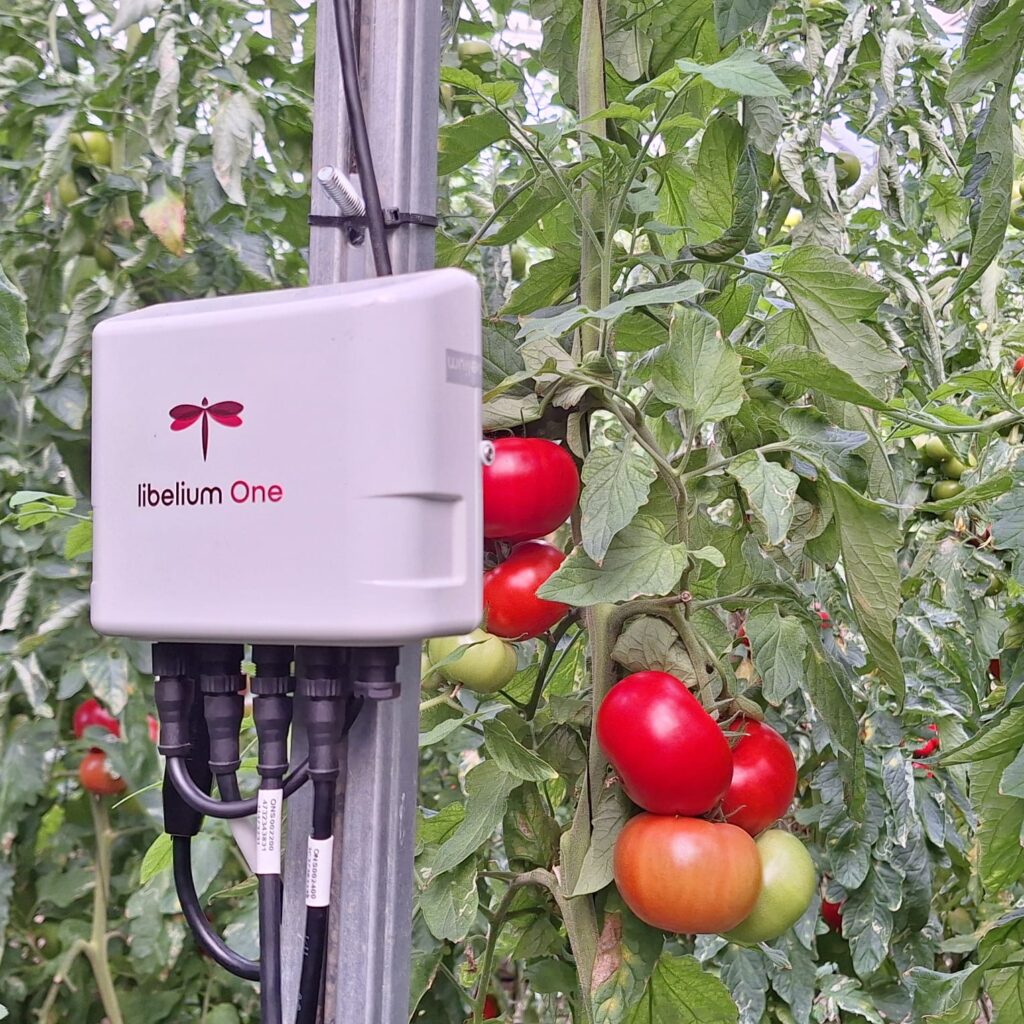
Libelium One allows continuous monitoring of essential soil, water and environmental variables, including soil moisture, trunk and fruit growth, leaf wetness, water quality (pH, turbidity, dissolved oxygen), noise levels, particulate matter (PM) and weather data; making it perfect for multi-purpose projects that combine environmental monitoring and smart agriculture to optimize sustainability and resource efficiency.
Ideal for Farms, Cities and beyond
- Smart Agriculture and Irrigation
- Urban Air Quality and Noise Control
- Climate, Soil and Water Monitoring in One Device
Water & Liquids sensors
Representative examples — confirmed at quotation stage.
- COD, BOD, TOC, SAC254 and temp StacSense, 2 mm path StacSense
- COD, BOD, TOC, SAC254 and temp StacSense, 50 mm path StacSense
- Conductivity, salinity and temperature C4E C4E
- Inductive conductivity, salinity and temperature CTZN CTZN
- Liquid level probe
- Manta+ 35A probe
- Manta+ 35B probe
- Optical dissolved oxygen and temperature OPTOD OPTOD
- pH, ORP and temperature PHEHT PHEHT
- Radar level VEGAPULS C21 VEGAPULS C21
- Suspended solids, turbidity, sludge blanket and temperature MES5 MES5
- Titanium optical dissolved oxygen and temperature OPTOD OPTOD
- Turbidity and temperature NTU NTU
Air & Gas sensors
Representative examples — confirmed at quotation stage.
- CH4 sensor
- CO sensor
- CO2 sensor
- H2 sensor
- H2S sensor
- NH3 sensor
- NO2 sensor
- O2 sensor
- O3 sensor
- Particle Matter (PM1 / PM2.5 / PM10)
- PH3 sensor
- SO2 sensor
- Temperature and Humidity
Precision Agriculture sensors
Representative examples — confirmed at quotation stage.
- Conductivity, water content and soil temperature TEROS 12 TEROS 12
- Fruit diameter
- Leaf wetness
- Leaf wetness (LWS) LWS
- Multilevel soil moisture
- Multilevel soil moisture and conductivity
- Non-contact surface temperature measurement SI-411 SI-411
- Soil moisture 1.5m, 4.5m or 8m (watermark) Watermark
- Soil oxygen level SO-411 SO-411
- Soil water potentials TEROS 21 TEROS 21
- Solar radiation (PAR) PAR
- Solar radiation (SP-510) SP-510
- Solar radiation and temperature Datasol MET2 Datasol MET2
- Tipping Bucket Accessory for GMX Weather Stations
- Trunk diameter
- Vapor pressure, humidity, temperature, and atmospheric pressure in soil and air VP-4 VP-4
- Volumetric water content and soil temperature TEROS 11 TEROS 11
- Weather station GMX-240 (W-PO) GMX-240
- Weather station GMX-550 (W-x-T-H-AP) GMX-550
- Weather station GMX-551 (W-x-T-H-AP-R) GMX-551
- WS-3000 (anemometer + wind vane + pluviometer) WS-3000
Smart Cities & Climate sensors
Representative examples — confirmed at quotation stage.
- Noise Level Sensor v2 Sensor v2
International cellular coverage
The One 4G variant includes a global SIM designed to simplify multi-country deployments without requiring separate operator agreements for every local installation.
Deutsche Telekom Global SIM Partnership
Global cellular roaming in 100+ countries with automated multi-carrier fallback and unified cloud provisioning via iris360 platform.
DEUTSCHE TELEKOM — SIM Partner

15 years designing IoT devices for field deployment
Libelium One builds on more than 15 years of experience developing field IoT devices and Plug & Sense! solutions for real deployments. This evolution incorporates lessons learned in sensor integration, power consumption, installation, connectivity and remote operation.
Low-power
Architecture optimised for extended field operation.
Reusable
Sensors that carry over across different projects.
Repairable
Refurbishable design extends service life.
Recyclable
Polycarbonate enclosure and eco packaging.
Designed to reduce deployment impact
Sustainable IoT architecture engineered for environmental protection and circular economy principles.
Certifications and protection
Hardware certified according to regional telecom guidelines: CE, FCC, IC, UKCA and PTCRB.
Documents and resources for Libelium One
Datasheets, technical guides and reference documentation for Libelium One integrators.
Need to validate a Libelium One configuration?
Talk to Libelium specialists about sensing requirements, connectivity, installation environment or software integration for your city.