



Libelium: From IoT Hardware to Sustainability Consultancy

The spanish company evolves into a consultancy firm to shoulder greater responsibility on sustainable and sovereign challengesus leo.

Table of Contents

Libelium: From IoT Hardware to Sustainability Consultancy

Environmental consultancy is changing fast. Libelium’s motivation has stayed surprisingly constant: stay close to the real world, listen carefully, and make things work.

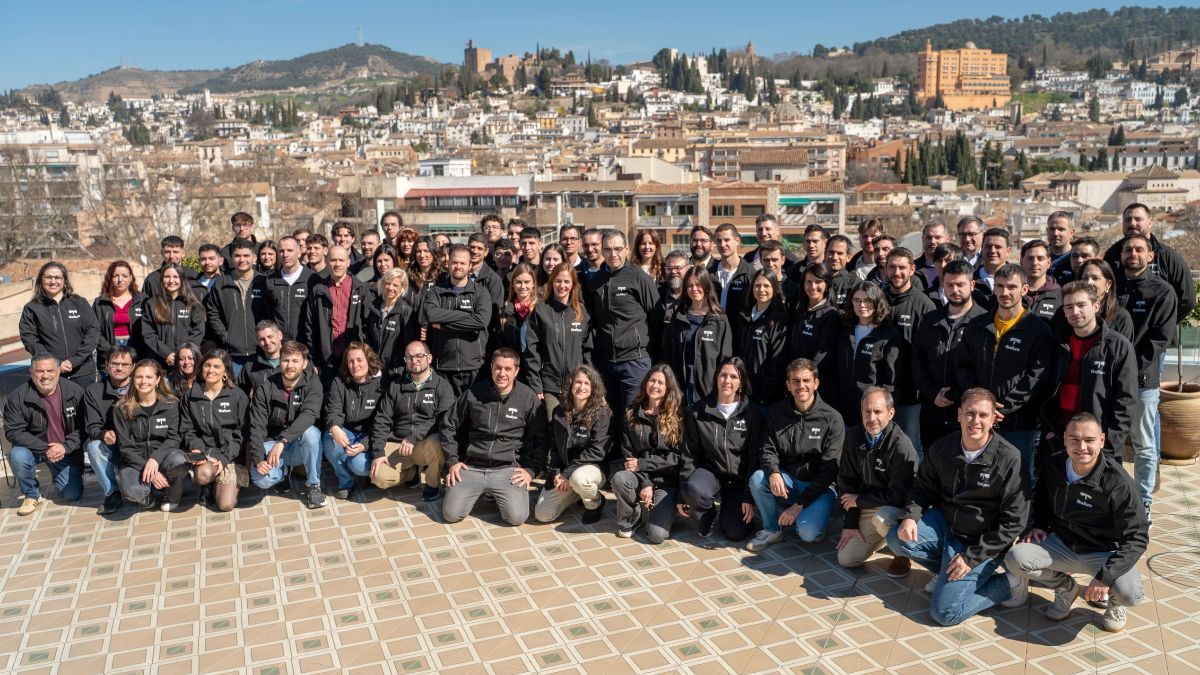
For almost 20 years, Libelium has been building technology for sustainability with one habit that shaped everything we do: we have always worked shoulder to shoulder with customers. That proximity is why consultancy is not a new chapter for us; it is simply the most honest way to describe what we have done for years in environment consultancy and what we are formalising now as an environmental consultant.

A 20-year journey built in the field, not in slides

If you have ever deployed sensors outdoors, connected assets in hard-to-reach places, or tried to turn messy operational data into a decision, you know that sustainability is not an abstract topic. It is a daily practice. Over the years we have been in that reality with cities, utilities, campuses, industrial sites and environmental teams that needed answers, not buzzwords, often delivering practical sustainability consulting services rather than slideware.


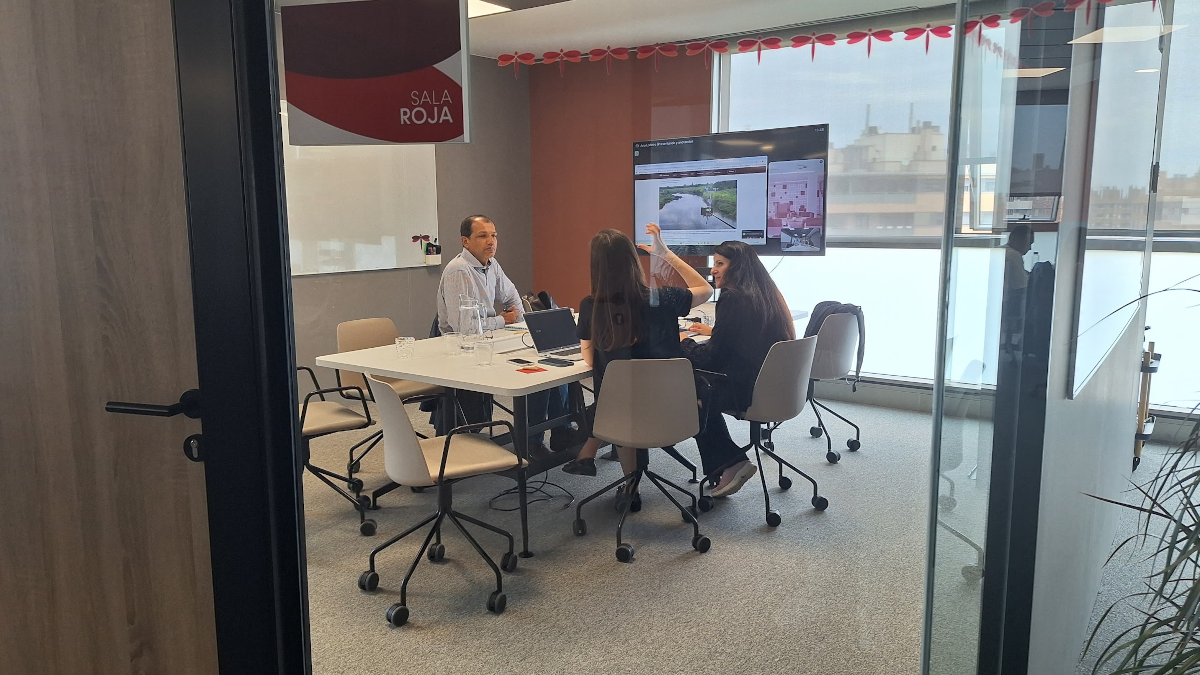
As with leading environmental consulting firms, our way of working took shape: start from the problem, validate assumptions with data, and design a solution that survives real conditions. The output was not just a device, a dashboard or a report. It was a system that people could rely on.

Why we call it consulting now

Because what clients ask for has evolved. Many organisations do not need “more data”. They need clarity: what to measure, where to measure it, how to trust it, how to act on it, and how to prove progress credibly to stakeholders—questions we hear across environmental consulting firms, sustainability consulting companies, and in-house teams.


Across Europe, sustainability expectations are becoming more evidence-driven. Requirements and frameworks such as CSRD and the EU Taxonomy are raising the bar for consistency, traceability and decision-grade information. These shifts are reshaping sustainability and climate change consulting.


The gap between ambition and execution often sits in the middle layer: the data architecture, the operational workflows, and the governance that keeps everything coherent over time.

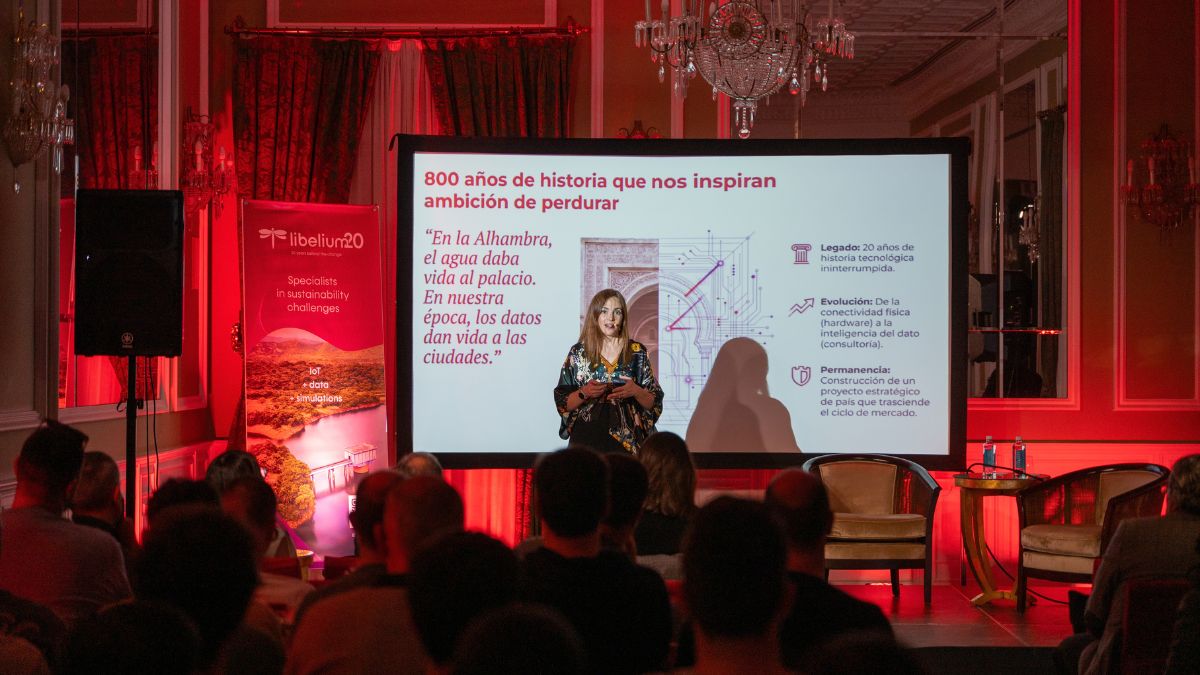
That middle layer is exactly where we have been working for years. Formalising it as consultancy makes it easier for customers to understand what we bring: a team that can connect strategy to operations, and operations to measurable outcomes.

We are not stopping product, because we like making things work

When a company moves into consulting, it can sound like they are stepping away from product. We are doing the opposite. We keep building because product is how we make solutions repeatable, scalable, and reliable—for our own teams and for partners ranging from small environmental consulting firms to large environmental consultant companies.

Our consulting work is powered by the tools we have created and continue to develop:

  • Libelium One, to accelerate deployment and reduce friction from pilot to scale.
  • iris360, our own data platform that connects monitoring data, operational data and sustainability KPIs in one place.
  • Data spaces, to help organisations share and govern data responsibly across partners and ecosystems.

We build these capabilities because sustainability programmes fail when the tooling is fragmented, the data is hard to trust, or the solution is too bespoke to maintain. Product helps us avoid that.

What "technology-led environmental consulting" looks like in practice

Environmental consulting—often called env consultancy—has traditionally been associated with assessments and compliance. That work remains important. But many of today’s sustainability challenges require a continuous cycle that connects measurement to decisions.


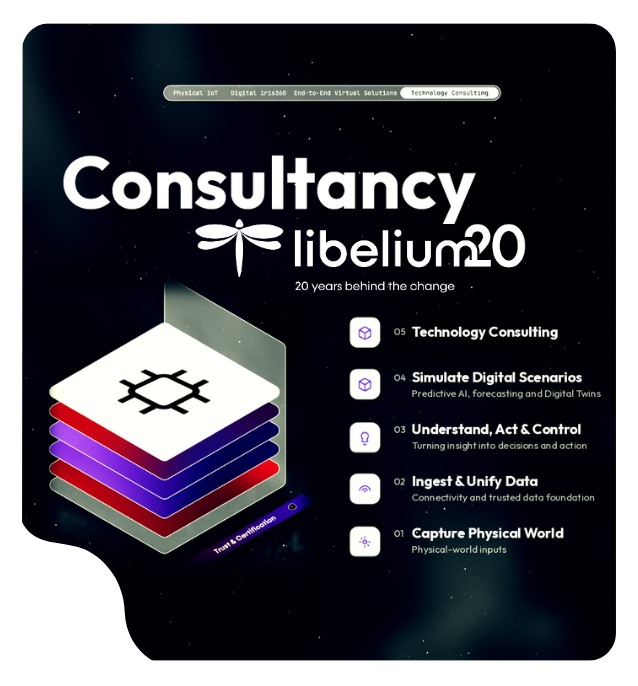
In our projects, IoT, AI and digital twins are not presented as separate “technologies”. They are parts of one workflow:

  • IoT brings monitoring closer to the source (air, water, noise, soil, energy, process variables), creating the ground truth.
  • iris360 turns raw signals into structured information: dashboards, alerts, KPI tracking and governance.
  • AI helps teams detect patterns, predict issues, and prioritise actions when data volumes become overwhelming.
  • Digital twins help stakeholders test scenarios and understand trade-offs before investing in changes in the physical world.

The result is not only better visibility. It is faster reaction time, fewer blind spots, and clearer evidence of what is improving and what is not.

How iris360 differentiates the way we deliver consulting

Many sustainability consulting services rely on a patchwork of tools and spreadsheets. The hidden cost is governance: inconsistent definitions, fragile processes, and reporting that becomes a recurring firefight.


iris360 is our backbone for turning sustainability into an operational capability. It helps us create a consistent approach across sites and countries, with traceable data pipelines that stand up to scrutiny. It also lets teams move from periodic snapshots to continuous performance management.

What to expect when you work with Libelium

We are a consultancy because we start from the customer’s reality. We are a product company because we want the solution to keep working after the project is delivered.

That combination is our story, and it is why we are expanding our consulting offering now: to help organisations across Europe build data-driven sustainability programmes that are credible, actionable, and built to last. We support clients across Europe, including partnerships with environmental consultant companies UK and environmental consultancy london teams, where local presence adds value.

Where we deliver the most impact

libelium consultancy

Technology-led consulting is most valuable when it reduces risk, cost, and uncertainty while improving environmental outcomes. Typical programmes include:

  • Industrial and logistics sites: continuous monitoring with alerting to reduce incidents and downtime.
  • Buildings and campuses: energy and indoor environmental quality optimisation with measurable performance improvements.
  • Utilities and water: quality monitoring, anomaly detection, and predictive maintenance support.
  • Cities and communities: sensor networks that inform climate adaptation and resilience planning.

In each case, the goal is the same: turn sustainability from a one-off project into a management system that improves over time. We also collaborate with partners and sustainability consulting firms when programmes span multiple regions.

Questions & Answers

Why is Libelium calling its work “consulting” now?

Client needs have shifted from “more data” to clarity—what and where to measure, how to trust it, how to act, and how to prove progress. With evidence-driven frameworks like CSRD and the EU Taxonomy raising expectations across Europe, the execution gap often lies in data architecture, workflows, and governance. Libelium has long worked in this “middle layer,” connecting strategy to operations and operations to measurable outcomes; formalising it as consultancy makes that value clear.

What is the “middle layer,” and why does it matter for sustainability programs?

The middle layer is the combination of data architecture, operational workflows, and governance that keeps everything coherent over time. It is where ambition turns into execution and where many programs stall. Libelium focuses here to ensure consistency, traceability, and decision-level information. Using iris360, they build traceable data pipelines and transition teams from periodic snapshots to continuous performance management.

How does technology-led environmental consulting differ from traditional approaches?

Traditional consulting often centers on assessments and compliance. Libelium adds a continuous cycle that links measurement to decisions through an integrated workflow: IoT generates ground-truth data; iris360 structures it into dashboards, alerts, KPIs, and governance; AI detects patterns, predicts issues, and prioritises actions; and digital twins test scenarios before changes in the physical world. The result is faster reaction time, fewer blind spots, and clearer evidence of improvement.

Are you moving away from products to focus on consulting?

No. Products remain central because they make solutions repeatable, scalable, and reliable. Libelium One accelerates deployment and smooths the path from pilot to scale; iris360 connects monitoring and operational data with sustainability KPIs; and data spaces enable responsible data sharing and governance across partners. This product backbone prevents fragmentation, builds trust in data, and avoids bespoke solutions that are hard to maintain.

Where do you deliver the most impact, and with whom do you work?

High-impact programs include: industrial and logistics sites (continuous monitoring and alerting), buildings and campuses (energy and indoor environmental quality optimisation), utilities and water (quality monitoring, anomaly detection, predictive maintenance), and cities and communities (sensor networks for climate adaptation and resilience). Libelium supports clients across Europe and collaborates with partners and other sustainability consulting firms, including UK and London teams, to add local value—always aiming to turn sustainability into a management system that improves over time.


Behind the Change.

Beyond the Challenge.

Newsletter

Stay up to date in IoT!

Sign up to our newsletter and receive the latest, exciting news.