

Category: Smart Environment
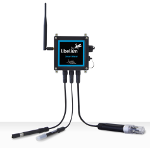
New Turbidity Sensor for Smart Water to Control Water Quality
With the the addition of the <strong>Turdibidy</strong> sensor to the Smart Water solution Libelium completes the range of water quality sensors available for <a href="https://www.libelium.com/iot-products/waspmote/" title="Waspmote">Waspmote</a> and <a href="https://www.libelium.com/iot-products/plug-sense/" title="Plug&Sense!" target="_blank" rel="noopener noreferrer">Plug & Sense!</a> platforms. The new set include: pH, dissolved oxygen (DO), oxidation-reduction potential (ORP), conductivity (salinity), turbidity, temperature and dissolved ions (Na<sup>+</sup>, Ca<sup>+</sup>, F<sup>-</sup>, Cl<sup>-</sup>, Br<sup>-</sup>, I<sup>-</sup>, Cu<sup>2+</sup>, K<sup>+</sup>, Mg<sup>2+</sup>, NO<sub>3</sub><sup>-</sup>). Read more.

Smart Water Sensors to monitor water quality in rivers, lakes and the sea
Libelium launched a Smart Water wireless sensor platform to simplify remote water quality monitoring. Equipped with multiple sensors that measure a dozen of the most relevant water quality parameters such as pH, dissolved oxygen (DO), oxidation-reduction potential (ORP) conductivity (salinity), temperature and dissolved ions such as Ca2+, Cl-, I-. Waspmote Smart Water is the first water quality-sensing platform to feature autonomous nodes that connect to the Cloud for real-time water control.

50 Sensor applications for a Smarter World. Get Inspired!
<p>More than <strong>50 billion devices</strong> will be connected to the Internet by 2020, but this new connectivity revolution has already started. Libelium publishes a compilation of 50 cutting edge Internet of Things applications grouped by vertical markets. </p>

Wireless Sensor Networks to monitor food sustainability
<p style="text-align: justify;">Given <a href="https://internationalsupermarketnews.com/">recent public alarm</a> at the safety of our food sources, this accuracy of monitoring our food supply during the transport and distribution increases consumer confidence and protects community health and the food industry's integrity. To prevent food insecurity, we require reliable food systems at each stage of the food cycle: from food <strong>production</strong> and <strong>harvesting</strong>, during <strong>transport</strong> and <strong>distribution</strong>, at the shops we buy at and in the social settings wherever we <strong>consume</strong> food, and in the <strong>management</strong> of the resulting <strong>bio-waste outputs</strong>. Libelium's <a href="https://www.libelium.com/iot-products/waspmote/">Waspmote</a> sensors can be used to monitor and control the whole food cycle. </p> <p> </p>
Wireless Sensor Networks to Control Radiation Levels
The creation of the Radiation Sensor Board has been motivated by the nuclear disaster in Fukushima after the unfortunate earthquake and tsunami struck Japan. We want to help authorities and security forces to measure the levels of radiation of the affected zones without compromising the life of the workers. For this reason we have created an autonomous battery powered Geiger Counter which can read the radiation levels automatically and send the information in real time using wireless technologies like ZigBee and GPRS.
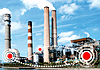
Monitoring indoor air quality with Waspmote to prevent accidents and improve production processes
<p>Many production processes in industry, agriculture, viticulture and livestock require specific environmental conditions to be monitored at all times. Sometimes the process can generate air pollutants that can be harmful and even deadly to workers in certain concentrations. The fact of having a monitoring system with <a href="https://www.libelium.com/iot-products/waspmote/">Waspmote</a> allows to control the parameters of a production process, send alerts via GPRS and even activate mechanisms through the relay actuator included in the prototype board. </p> <p> </p>
Sensor networks to monitor air pollution in cities
<p><a href="https://www.ecologistasenaccion.org">Studies</a><span id="result_box" lang="en"><span> show that more than 16,000 people die prematurely in Spain by breathing polluted air, being the </span></span><span id="result_box" lang="en"><span>traffic</span></span><span id="result_box" lang="en"><span> responsible for up to 80% of that pollution. </span><span>This figure is 4 times greater than the number of annual traffic accident victims. </span><span>In Europe, <strong>CO2 </strong>emissions from <span style="text-decoration: underline;">road transport</span> (half of them come from urban transport) have increased by 32% since 1990. </span><span>Each liter of fuel burnt is issuing up to 2.3 kg of CO2. </span><span>Thus, each person who uses the car for journeys to work (with an average distance of approximately 15 km) emits about 2 tonnes of CO2 a year. </span><span>The increase also generates more traffic jams, which cause a loss of 100,000€ million per year in the European Union. </span><span><strong>Monitor pollution</strong> levels in central cities is key to provide adequate information to citizens and <strong>take actions</strong> to reduce it.</p>