
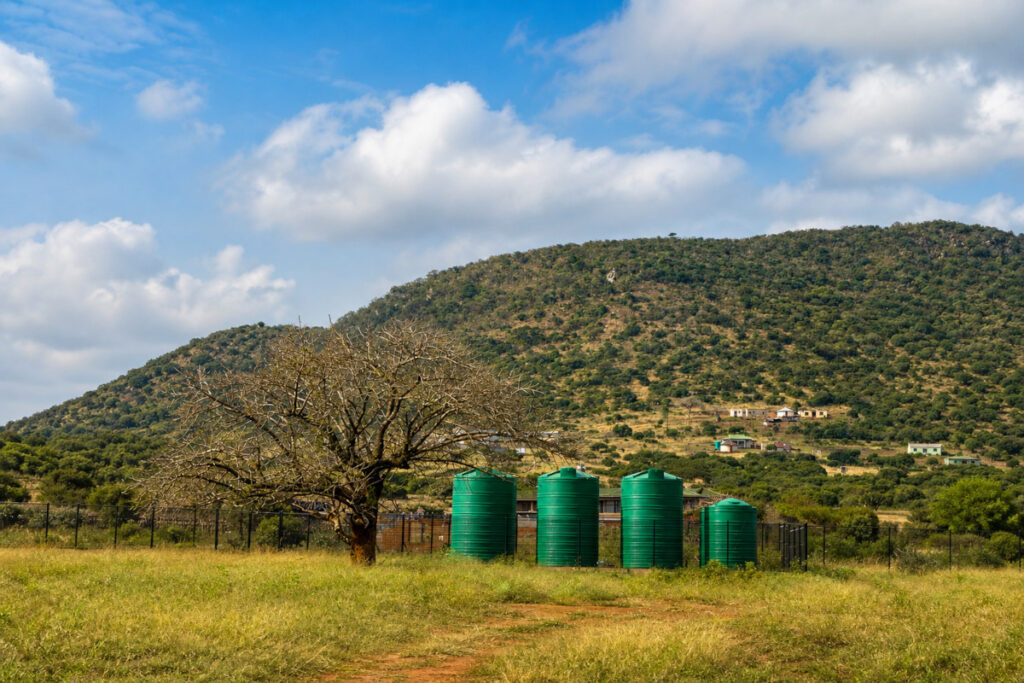
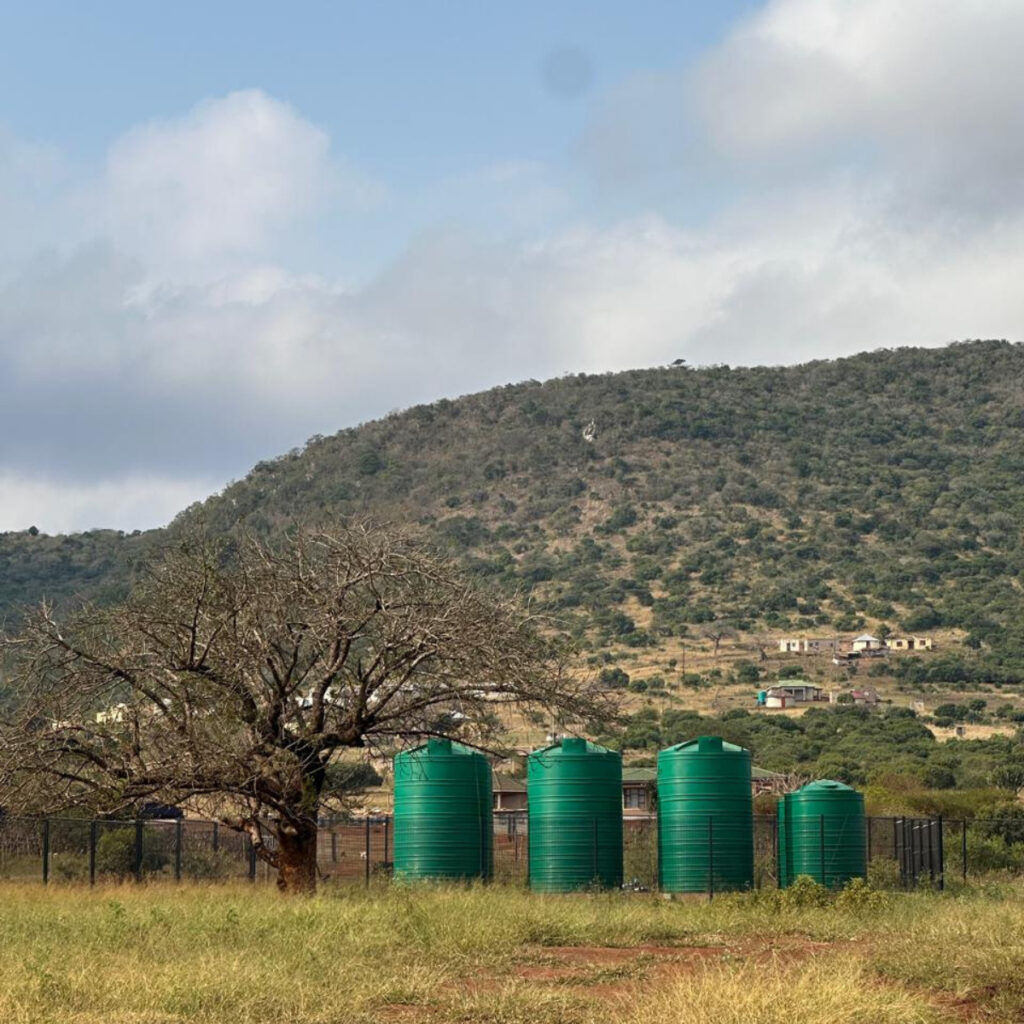
In many rural communities in South Africa, drinking water for smaller facilities such as schools and clinics is supplied from local boreholes and storage tanks. While national water boards and district municipalities effectively manage bulk supplies, these decentralised facilities can benefit from more frequent, locally‑based monitoring to ensure continued alignment with SANS 241 and protect public health. Introducing reliable, real‑time water quality monitoring offers a practical, scalable way to close this gap and support ongoing regulatory compliance.
Behind the change:
Improving water quality oversight
In these remote areas, logistical constraints often hinder timely assessments. Traditional methods rely on manual sampling and laboratory analysis, which can take weeks to produce results. This delay limits the ability to proactively manage water quality, creating uncertainty for vulnerable communities.
The consequence is clear: there is no early warning. Changes in groundwater, agricultural runoff, or tank contamination can go unnoticed until it is too late.
Without the capacity for frequent monitoring, rural communities are left vulnerable to health threats, often forced to rely on emergency water deliveries because of a lack of sustainable water management in rural areas.
And in the meantime… Public services, such as schools and clinics where the most vulnerable population is located, must be supplied by tankers deployed to the area, accompanied by notices to the population to boil the water before consumption.
A collaborative approach for Smart Water Management
To address these challenges, AQRESS, a South African based technology and engineering firm in strategic collaboration with Libelium, has developed and implemented a cutting-edge IoT solution. The project involved the installation of high-precision water quality sensors across multiple boreholes serving rural villages, schools, and clinics.
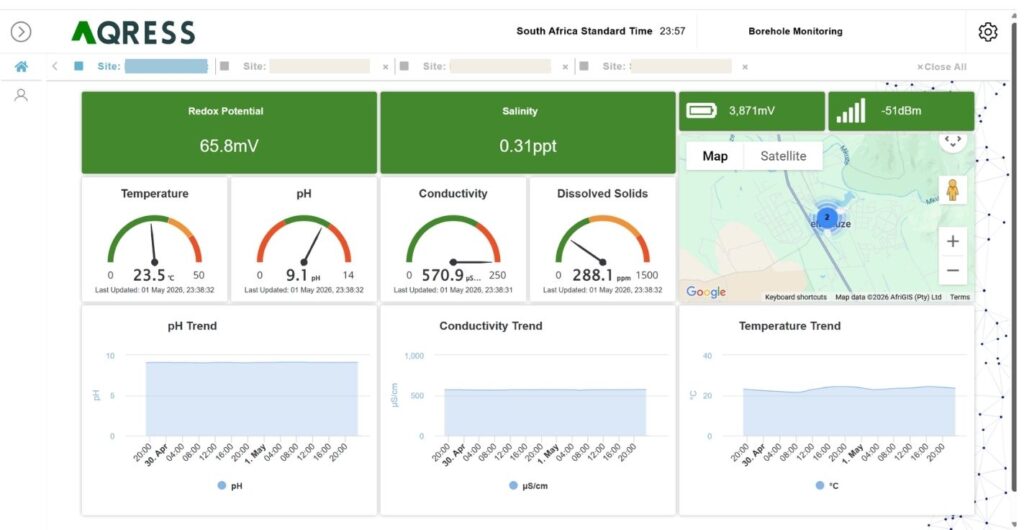
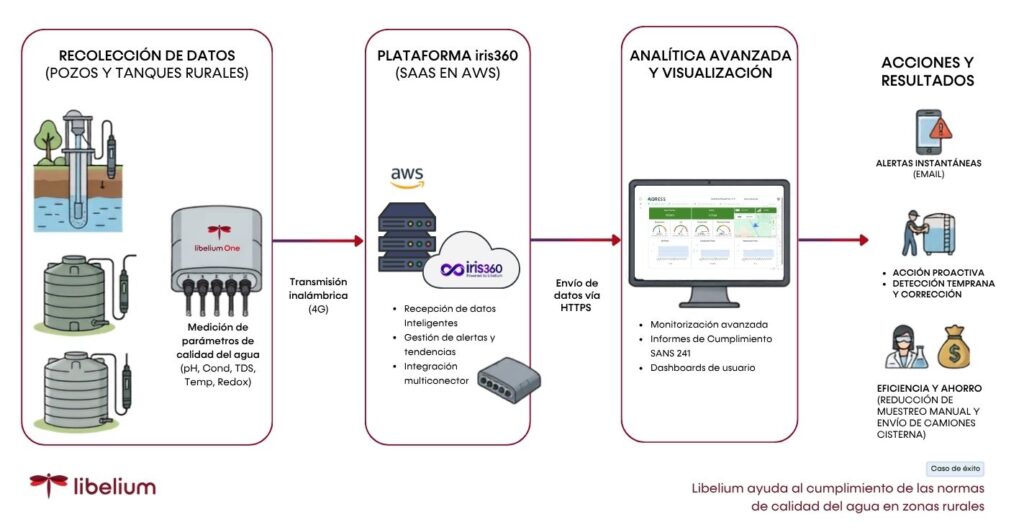
These sensors capture critical water quality data at the source and transmit it instantly to a centralised digital platform which enables the following:
- Real-time alerts when water quality deviates from SANS 241 thresholds
- Access dashboards and reports for compliance, planning, and maintenance
- Identify trends and respond proactively before issues affect users
“To transform water security on a larger scale, a unified, collaborative effort between government and the private sector is essential. By scaling this solution, we can create a blueprint for resilient, technology-led water governance that can be expanded to rural communities across the entire African continent”, said Lenard, Engineering & Technology Executive at AQRESS.
Improving water quality oversight
AQRESS initiated a digital transformation for water utilities by deploying robust IoT water quality sensors to monitor critical parameters. It was not about driving faster, but about transforming the intelligence of the data.
We live in the age of data (another source of wealth), and the current solution for this challenge provides:
- From sensor to decision: Physical data is instantly transformed into a usable and shareable asset by monitoring some water quality parameters such as temperature, pH or conductivity.
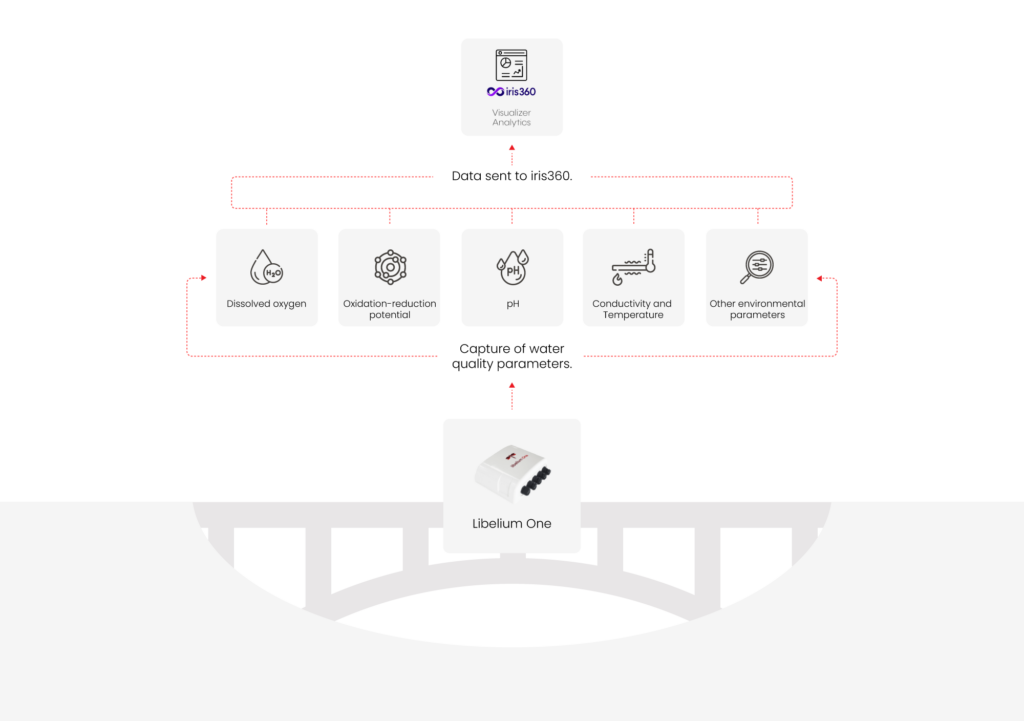
- End to information silos: Final visualization is performed in a third-party IoT platform, thanks to the multi-connector functionality on iris360, the data is securely passed to the platform for advanced monitoring, reporting, and analytics using the HTTPS connector.
- Scalability: The flexibility of iris360, as a SaaS solution running on AWS servers, has allowed for starting with a monitoring pilot and expanding it to other rural areas of the country as the project secures more funding.
Data-driven water utility solution
This project leverages data-driven water utility solutions to transform raw measurements into actionable intelligence via iris360.
- Proactive management: The system acts as a sophisticated environmental monitoring system that detects anomalies in near real-time, allowing for rapid intervention before public health crises occur.
- Operational efficiency:
- By integrating IoT data analytics for water infrastructure, teams can move away from manual laboratory reliance, resulting in significant cost savings and optimized maintenance schedules.
- Instant alerts via email for operational breaches (e.g., pH out of range, conductivity spike) to operators.
- The alerts also include low battery or not charging the IoT devices to alert the AQRESS support team of possible issues with the field devices or connectivity issues.
- Automated compliance: The project provides automated water quality reporting, ensuring that public agents have constant visibility and can make informed decisions based on accurate data to align with SANS 241 verification requirements.
In future, the system will be integrated with other systems for integrated monitoring and reporting post the current phase.
Beyond the Challenge:
Immediate... and invisible results
This integration of IoT with data management changed the rules of the game. The detection time for any parameter non-compliance was reduced from months to hours.
- Action before the crisis: In a clinic, the system detected a sudden change in pH and redox potential. This early warning identified a deviation in chemical dosing that was corrected before a microbiological breach occurred. This is risk reduction with data.
- Tangible savings: The continuous increase in conductivity and TDS in a school tank in Nkandla confirmed contamination. The tank was immediately removed for cleaning and disinfection. This proactive action avoided emergency costs, such as water tanker deliveries or boil-water notices.
- Budgetary efficiency: The need for laboratory analysis was reduced. An estimated decrease of up to 50% in routine microbiological checks is expected, as confidence in continuous data reduces the reliance on manual sampling.
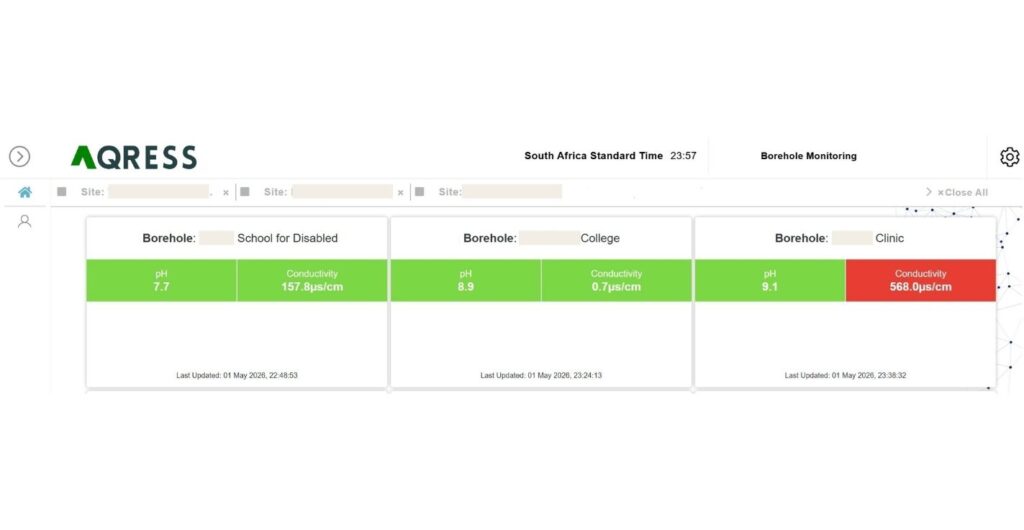
Now, water quality in rural communities can be monitored in near real-time and send teams to address the root cause rather than traveling between multiple rural sites, saving them time and money.
By transforming water management into a proactive and data-driven service, access to safe drinking water is guaranteed, which is an essential pillar for rural health and sustainability objectives.
At Libelium, we know that progress consists primarily of things that stop happening: the reduction of diarrheal diseases, the improvement of nutrient absorption (both in agriculture and food), the improvement of human hydration, and the ability to plan long-term, reducing the anxiety of possibly not having drinking water tomorrow…
By transforming water management into a proactive and data-driven service, access to safe drinking water is guaranteed, which is an essential pillar for urban health and a sustainable political legacy.