

Category: Positive Technology

Sensor networks to monitor air pollution in cities
<p><a href="https://www.ecologistasenaccion.org">Studies</a><span id="result_box" lang="en"><span> show that more than 16,000 people die prematurely in Spain by breathing polluted air, being the </span></span><span id="result_box" lang="en"><span>traffic</span></span><span id="result_box" lang="en"><span> responsible for up to 80% of that pollution. </span><span>This figure is 4 times greater than the number of annual traffic accident victims. </span><span>In Europe, <strong>CO2 </strong>emissions from <span style="text-decoration: underline;">road transport</span> (half of them come from urban transport) have increased by 32% since 1990. </span><span>Each liter of fuel burnt is issuing up to 2.3 kg of CO2. </span><span>Thus, each person who uses the car for journeys to work (with an average distance of approximately 15 km) emits about 2 tonnes of CO2 a year. </span><span>The increase also generates more traffic jams, which cause a loss of 100,000€ million per year in the European Union. </span><span><strong>Monitor pollution</strong> levels in central cities is key to provide adequate information to citizens and <strong>take actions</strong> to reduce it.</p>
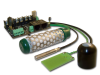
New Waspmote Sensor Board enables extreme precision agriculture in vineyards and greenhouses
<p>The new Agriculture Sensor Board for Libelium’s award-winning Waspmote platform enables very precise <strong>irrigation</strong> and climate control for <strong>vineyards</strong> and <strong>greenhouses</strong> by monitoring up to 14<strong> </strong>environmental parameters: air temperature, air humidity, soil temperature, soil moisture, leaf wetness, atmospheric pressure, solar radiation, trunk/stem/fruit diameter, wind speed, wind direction and rainfall.</p> <p>This sophisticated monitoring brings extreme precision to crop growing in vineyards and greenhouses by enabling irrigation and climate control to be matched to local conditions. </p>
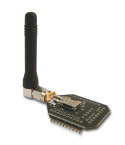
Libelium opens access to Bluetooth Wireless Sensor Networks
<p>Libelium announces a new <strong>Bluetooth</strong> module for the Waspmote wireless sensor network platform. This module enables wireless sensor networks to be directly linked to portable devices such as <span lang="en-GB"><strong>smart phones</strong></span><span lang="en-GB"> and laptop computers. This capability is particularly useful for </span><span lang="en-GB"><span style="text-decoration: underline;">medical</span></span><span lang="en-GB"> applications and for </span><span lang="en-GB"><span style="text-decoration: underline;">industrial</span></span><span lang="en-GB"> diagnostics. Additionally, when combined with the <a href="https://www.libelium.com/iot-products/">Meshlium</a> multi-protocol router, it supports the deployment of </span><span lang="en-GB"><strong>hybrid ZigBee- and Bluetooth</strong></span><span lang="en-GB">-based wireless sensor networks. <br /></span></p>
Triple Security in ZigBee: Link, Network and Application layer Encryptions
ZigBee sets three layers of security, the first one is based on the IEEE 802.15.4 Link layer encryption. The others are implemented in the <strong>Networking</strong> and <strong>Application</strong> layers. All of them uses AES 128b as encryption mechanism but differ from the kind of authentication and privacy policies.

12Km ZigBee link with Waspmote
During the research of the Waspmote platform, tests were conducted using different transceivers across various frequency bands (2.4GHz, 868MHz, and 900MHz) and transmission power levels. Field trials in the Monegros Desert (Spain) aimed to evaluate the performance and range limits of the integrated 802.15.4/ZigBee radios.

Security in 802.15.4 and ZigBee networks
<p>As pointed in the previous article <em><strong>802.15.4 vs Zigbee</strong></em>, the IEEE MAC layer implements several features which are used by the Zigbee protocol in the network and application layers. One of this features is the security services. <br /><strong>IEEE 802.15.4</strong> sets the encryption algorithm to use when cyphering the data to transmit, however, the standard does not specify <strong>how</strong> the keys have to be managed or what kind of <strong>authentication policies</strong> have to be applied. These issues are treated in the upper layers which are managed by technologies such as <strong>ZigBee</strong>.</p>