Data sovereignty: Why Critical IoT is the auditable standard in Europe
Table of Contents
If a sensor fails in a lab, it’s inconvenient. If it fails on a water network, a railway line, or a substation, it can become a real-world problem in minutes. That’s the difference between “IoT” and Critical IoT: we’re talking about connected systems that underpin services people and businesses rely on every day.
Critical IoT is reshaping how we run IoT critical infrastructure, from energy and transport to water and healthcare, by making the physical world measurable, visible, and crucially manageable in real time.
Would you leave the monitoring of water quality in your tank in the hands of a €5 sensor?
At Libelium, we capture the data that transforms the world. Not as an abstract promise, but as a practical approach: we help teams turn field data into decisions that reduce risk, improve efficiency, and protect resources across water quality and management, infrastructure, Industry 5.0, and agriculture.
Of course, when the stakes are high, connectivity alone isn’t enough. Critical IoT has to be secure, resilient, and designed for the long run, because the cost of “good enough” shows up as downtime, incidents, and uncertainty.
Would you leave the monitoring of water quality in your tank in the hands of a €5 sensor?
What is Critical IoT? Defining the concept and its role in sovereignty
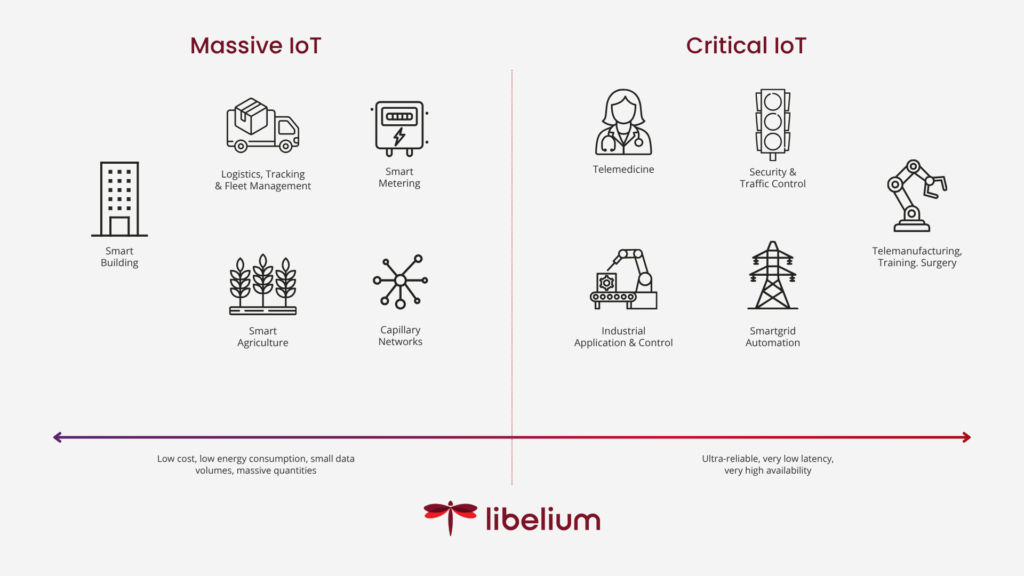
Critical IoT refers to connected devices, networks, and data platforms that support essential services and mission-critical operations. Think power grids, hospitals, logistics hubs, tunnels and bridges, water utilities, and industrial plants. In these contexts, reliability and integrity are not optional—they’re the baseline.
The point isn’t collecting more data. It’s collecting the right data, at the right time, and making it usable. That’s how Critical IoT strengthens resilience:
Continuous monitoring to detect issues early, not after a failure.
Decision support built on evidence rather than assumptions.
Security-by-design to reduce exposure as systems scale.
In Critical IoT, sovereignty is inseparable from data veracity. It is not enough for data to reside on a European server if the source information has been manipulated on a vulnerable sensor. Libelium’s technology is designed to act as a digital notary, guaranteeing the traceability and integrity of information from the edge.
When Critical IoT works well, it quietly prevents disruption. When it doesn’t, the impact is visible to everyone: customers, citizens, operators, and regulators.
The backbone: IoT in critical infrastructure
IoT has become the nervous system of modern infrastructure. In practice, it means sensors in the field, reliable communications, and software that turns signals into insight. That combination helps operators move from reactive maintenance to proactive operations.
Some of the most common outcomes are straightforward (and measurable):
Faster detection of anomalies and emerging risks.
Better service continuity through predictive maintenance.
Smarter use of resources (energy, water, materials, time).
And yes—there are trade-offs. Every new connection is a potential new attack surface, and every additional system can create integration headaches. That’s why architecture matters: critical systems need redundancy, observability, and a clear plan for lifecycle management.
Mission critical IoT shows up wherever real-time conditions affect safety, service, or high-value assets. The defining characteristic of a mission-critical environment is that reliability and integrity are not optional; they are fundamental. If a component fails, it can become a serious and visible problem within minutes.
A few familiar examples:
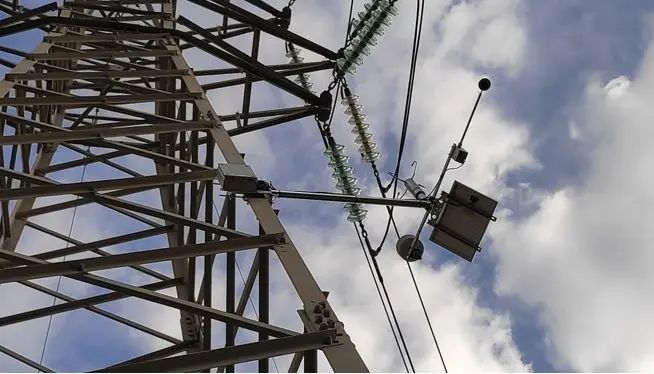
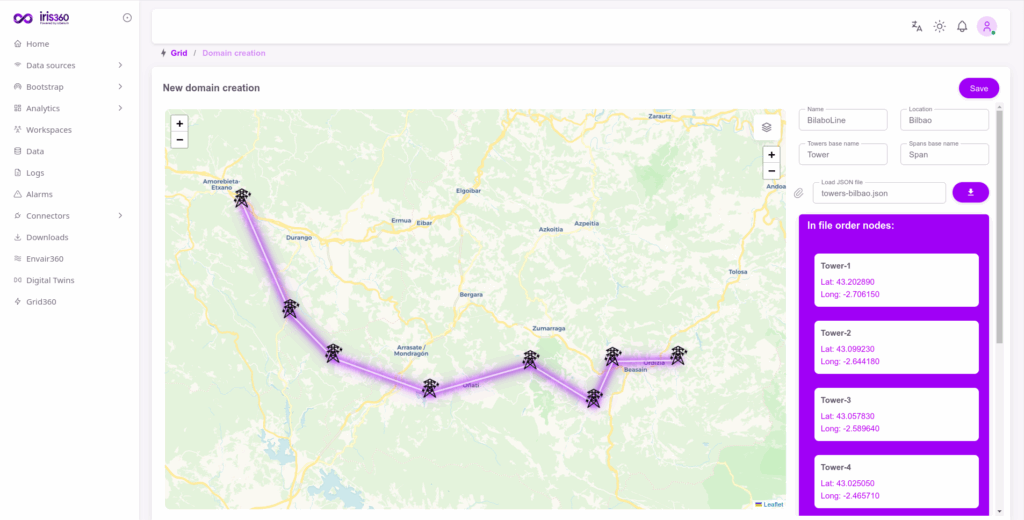
Energy: Improving the operational efficiency of the electrical grid with companies like Red Eléctrica Española (REE). We use grid360 for predictive modeling and environmental monitoring on high-voltage lines.
Water Quality: In Panamá Channel, where a leak can affect the drinking water, a real-time monitoring system is crucial for the health of the population and the environment.
Global Projects: Demonstrating reliability in extreme environments such as NEOM The Line (AI-driven air quality monitoring) and the New York City Subway (passenger flow measurement).
Service Continuity: Used for continuous water quality monitoring in high-value environments like the Port of Algeciras and for preventing risk situations, such as the early detection of floods in Argentina.
The common thread is trust. In mission-critical settings, teams need to trust the data, trust the system, and trust that it will still perform under pressure.
Key challenges in Critical IoT (and how teams tackle them)
If you’ve ever typed “challenges iot critical” into a search bar, you’re not alone. The same concerns come up across sectors—and they’re worth taking seriously:
Cybersecurity: more endpoints, more vendors, more complexity. Strong identity, segmentation, patching processes, and monitoring become mandatory.
Data governance and privacy: not all IoT data is personal, but in many environments it becomes sensitive quickly (think location, access logs, operational patterns).
Reliability: critical operations need resilient connectivity, failover planning, and clear “degraded mode” behaviour.
Interoperability: devices and platforms don’t always speak the same language. Standards help, but integration is still real work.
None of these are deal-breakers. But they do change how you design a project: you plan for security and maintenance from day one, not as a retrofit.
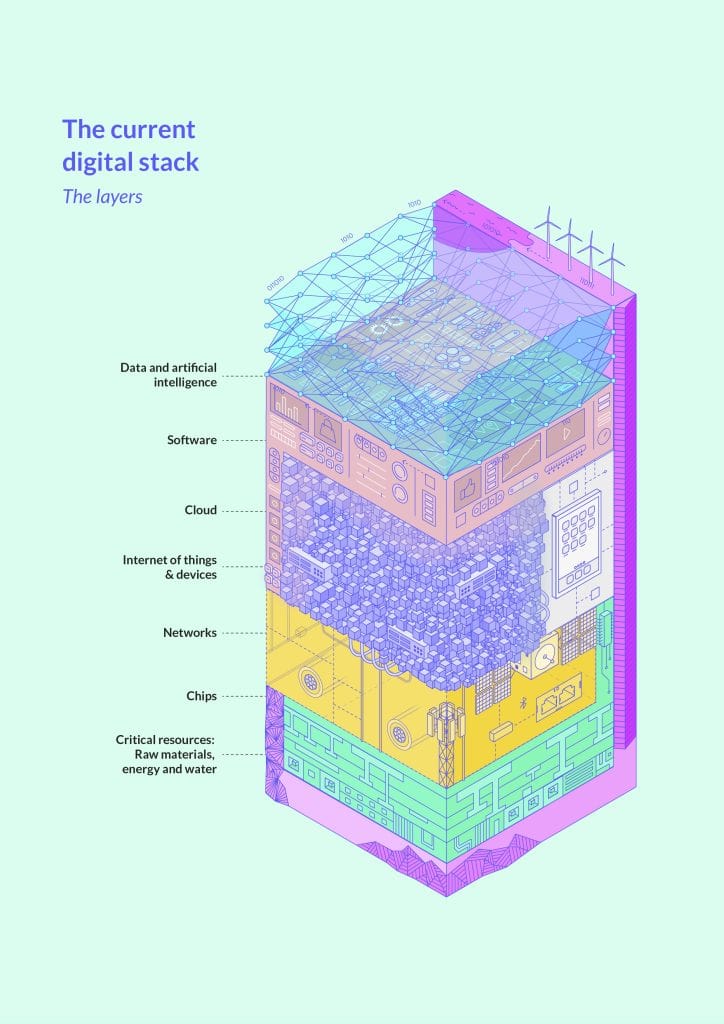
EuroStack, sovereignty from the sensor to the AI
In Europe, Critical IoT is increasingly tied to a bigger conversation: resilience, compliance, and digital sovereignty. You may hear the term EuroStack used to describe an ambition to strengthen European capability across the full digital stack—devices, connectivity, cloud, data spaces, and AI—so critical services aren’t overly dependent on a narrow set of external providers.
If we are going to define our sovereignty from the data, it has to be reliable, trusted and verified across every stakeholder. That means interoperability, security-by-design, and governance that works across borders. In this context, European Data Spaces are the place to be in this new economy.
Regulation matters here because it sets expectations for how critical systems are built and operated. Depending on your sector, several EU frameworks commonly shape Critical IoT programmes:
NIS2 (Directive (EU) 2022/2555): raises the bar for cyber risk management and incident reporting for essential/important entities and, in many cases, their supply chains.
CER (Directive (EU) 2022/2557):focuses on the resilience of critical entities—pushing organisations to assess risk, strengthen continuity, and demonstrate preparedness.
GDPR: sets strict rules for personal data. Even industrial data can become personal once it links to individuals or behaviour.
EU Data Governance Act & EU Data Act: support trusted data sharing and clarify access/usage rights—relevant when infrastructure data must move across partners and ecosystems.
Cyber Resilience Act (CRA): pushes security requirements for products with digital elements, including vulnerability handling and lifecycle responsibilities.
Too many regulations, uh?
Often, the European Union’s regulatory onslaught is perceived by organizations as a bureaucratic barrier. European regulation is not bureaucracy; it is the world’s greatest technological quality seal.
The goal of regulations is not to add layers of regulatory complexity, but to simplify and unify certification and security processes across the single market. By standardizing cybersecurity requirements and component provenance, the EU is creating a natural filter: separating unreliable hardware from solutions designed to withstand systemic crises.
It is the only guarantee that an infrastructure is geopolitically and operationally secure. Critical IoT natively adopts these regulations, transforming legal compliance into an asset of trust and resilience for businesses and governments.
For operators and technology providers, the takeaway is simple: in Europe, “critical” increasingly means auditable—security controls, data practices, and operational processes that stand up to scrutiny.
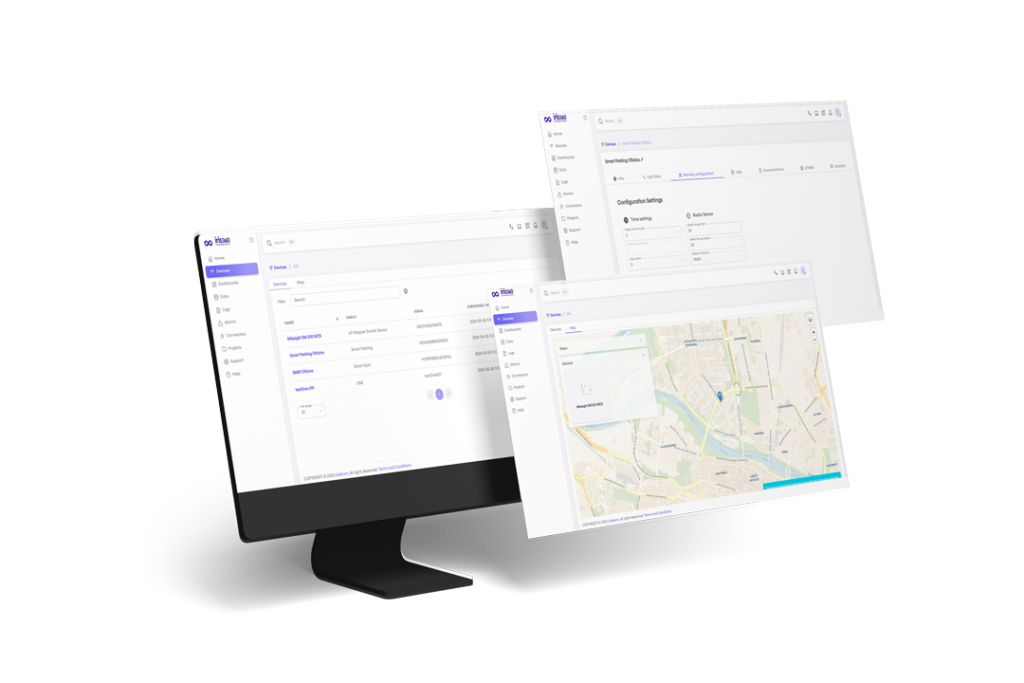
Libelium’s Critical IoT addresses this regulatory urgency. Our iris360 platform is positioning itself as the preferred choice for integration and reporting, providing a unified data space to lay the foundation for auditing and optimizing daily management, preparing for European Data Spaces.
Digital twins and predictive analytics: Reducing risk and enhancing efficiency
Once you have reliable data, the next step is turning it into foresight. That’s where Digital Twins and predictive analytics help. A digital twin is a living, virtual representation of an asset or system. It lets teams test scenarios—without taking real-world risks.
What happens if demand spikes?
What’s the likely failure window for a component?
Which intervention gives the best risk reduction for the budget?
Paired with predictive analytics, this approach shifts maintenance and operations from “schedule-based” to “condition-based”—and that is one of the biggest efficiency gains in critical environments.
Where Critical IoT creates measurable impact: From water to industry
Critical IoT becomes valuable when it delivers outcomes: fewer incidents, less downtime, better compliance, and clearer priorities. That starts with reliable data capture at the edge and ends with decisions teams can defend—operationally, financially, and regulatorily.
Libelium focuses on turning sensing into impact across four domains:
Water quality and management: continuous monitoring to detect deviations early, protect ecosystems, and support regulatory reporting.
Infrastructure: monitoring assets and environments to anticipate failures and optimise maintenance planning.
Industry 5.0: connected operations that improve performance while keeping safety and the human factor at the centre.
Agriculture: data-driven insights for soil and environmental conditions to optimise inputs and build resilience against climate pressure.
Mobility and road safety: traffic faces the challenge of obtaining high-precision data over many kilometers of asphalt.
Because in critical contexts, the goal isn’t more dashboards. It’s fewer surprises.
Industry 5.0 and ESG: Human-centric and sustainable IoT
Industry 5.0 adds an important nuance to automation: technology should work with people, not simply replace them. In critical operations, that means safer work environments, better situational awareness, and systems designed around real workflows.
IoT also supports ESG goals in a practical way: measuring consumption, emissions, and operational losses so organisations can improve performance with evidence, not estimates. Sustainability becomes easier when you can see what’s happening—continuously.
Overcoming data silos: Unlocking the value of IoT data
A common (and frustrating) pattern in IoT programmes is that data exists—just not where it needs to be. Different teams use different systems. Vendors provide different portals. Valuable signals stay trapped in silos.
Breaking those silos is often where the real ROI appears. When data can move safely across teams and platforms, organisations can:
respond faster,
compare performance across sites, and
apply analytics consistently (instead of reinventing the wheel each time).
Truth in, Trust out
AI is only as good as the data it’s fed. In contrast to the “garbage in, garbage out” general idea, Critical IoT seeks the opposite: truth in, trust out, let’s say.
AI and machine learning are increasingly used to detect anomalies, forecast failures, and optimize operations in real time. In critical environments, the winning pattern is usually “AI with guardrails”: clear governance, explainability where needed, and human oversight for high-impact decisions.
As these tools mature, Critical IoT will feel less like a set of devices and more like a capability: the ability to sense, understand, and act—quickly and safely—at scale.
Conventional IoT was for experimentation –we know this because we did it for years.
Critical IoT, with its focus on truth, is the standard for securely governing the real world.
Libelium’s mission is simple: to empower Datacracy by capturing the data that transforms the world. By empowering decision-making with reliable, real-time insights, from water quality to infrastructure, we are moving Critical IoT from connectivity to impact.
Behind the Change.
Beyond the Challenge.
Newsletter
Stay up to date in IoT!
Sign up to our newsletter and receive the latest, exciting news.



 English
  Español