

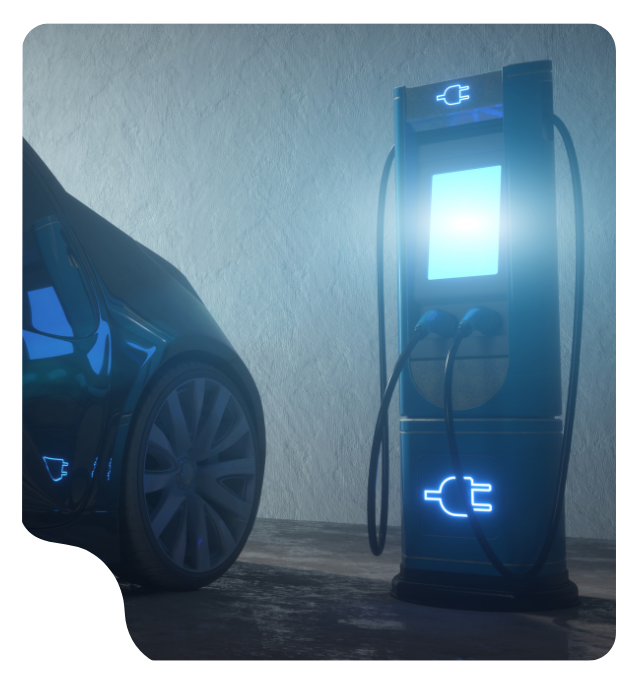
Fire detection in EV charging stations is becoming increasingly important as electric vehicle charging infrastructure continues to expand.
The challenge is not simply to detect smoke or flames once a fire has already developed. In remote or unmanned facilities, identifying an abnormal temperature increase, communicating it quickly and understanding how the situation evolves can significantly improve incident response.
In industrial projects of this type, the challenge goes far beyond installing a sensor.
The real objective is to build the complete technology chain required to capture a physical parameter, process the data, communicate it, store it, transform it into a meaningful alarm and integrate it into the systems used by operators to make decisions.
A complete approach may therefore combine industrial sensing, IoT and edge devices, connectivity, remote device management, data platforms, alarm logic, system integration and analytics.
This end-to-end approach is particularly relevant in industrial environments.An EV charging station is not simply a charger. It is an infrastructure that includes electrical equipment, power electronics, electrical cabinets, communications and auxiliary systems that need to remain safe and available.
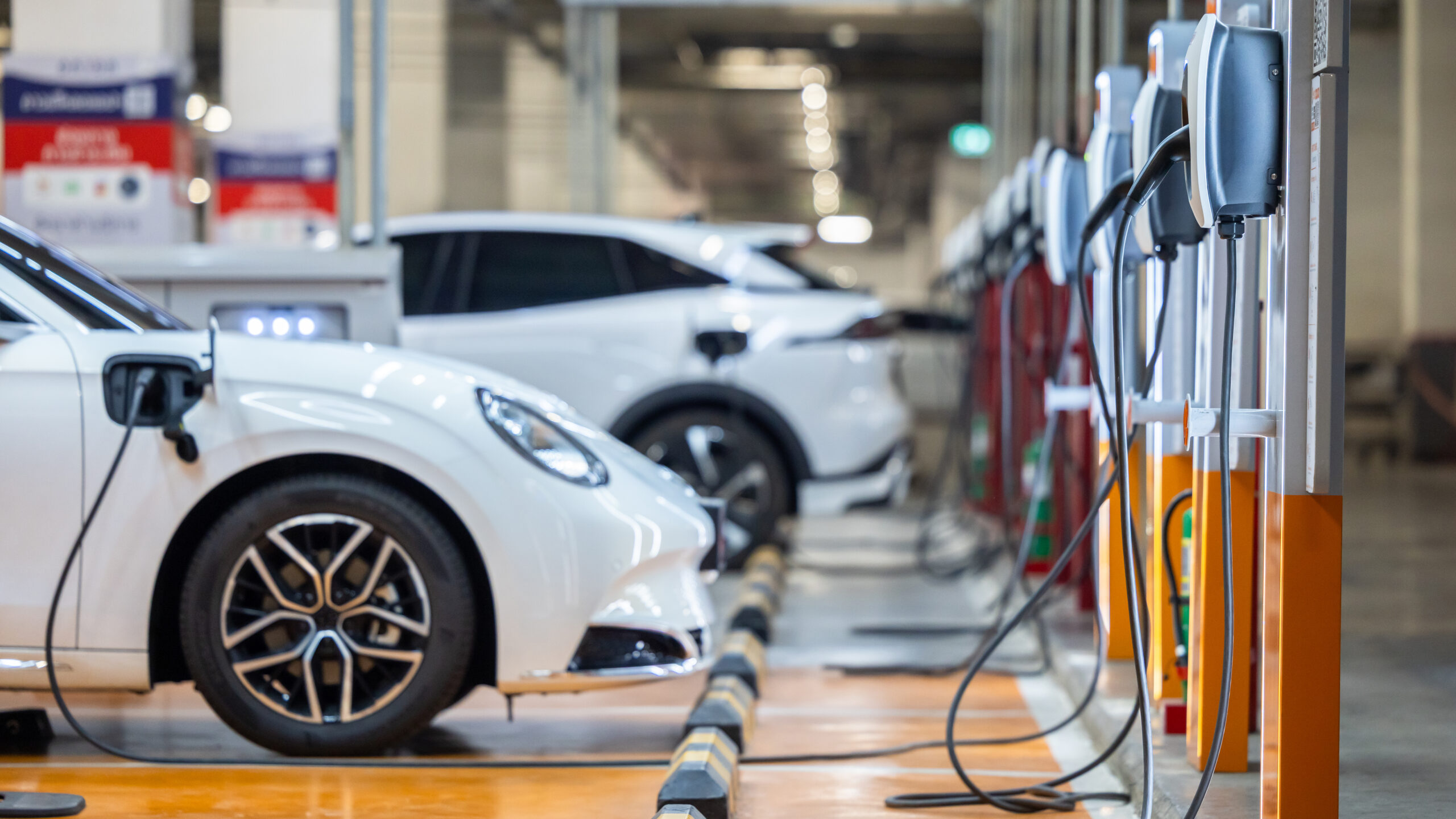
Where can a fire start in an EV charging station?
Electric mobility fire safety discussions often focus on the lithium-ion battery inside the vehicle.
However, the charging infrastructure itself includes many other components that can experience electrical or thermal faults, including:
- AC chargers
- DC fast chargers
- electrical cabinets
- rectifiers
- power converters
- transformers
- wiring
- electrical connections
- protection systems
- cooling systems
- communications equipment
- energy storage systems
Each component operates within defined temperature, current and power ranges.
A defective connection, excessive load, degraded component, ventilation issue or demanding environmental condition can contribute to abnormal thermal behaviour.
The challenge becomes particularly relevant when charging infrastructure operates far from maintenance personnel.
A charging station may be located on a motorway, at a service area, in an industrial site, a logistics centre or another remote location. If overheating develops inside an electrical cabinet, there may be nobody nearby to identify the problem visually.
For this reason, remote thermal monitoring can provide an additional layer of visibility, prevention and operational intelligence.
The environment also influences fire risk
Not every EV charging facility operates under the same conditions. The physical environment surrounding a charging station can influence both how an incident develops and the consequences it may have.
Outdoor charging infrastructure normally provides a more open environment for heat, smoke and gases to disperse. However, equipment can also be exposed directly to solar radiation, high ambient temperatures, rain, humidity, dust and significant temperature variations.
Indoor charging presents a different challenge. Chargers installed in underground car parks, covered parking facilities, logistics centres or industrial buildings operate in more confined environments. Vehicle spacing, ventilation, the position of neighbouring assets and the characteristics of the structure may all influence fire development and spread.
The Fire Protection Research Foundation has identified the potential for fire spread between vehicles as a relevant issue in parking structures, while also highlighting that variables such as ignition location, vehicle configuration, sprinkler placement and other site-specific factors can significantly affect fire development.
The environment should therefore form part of the risk assessment.
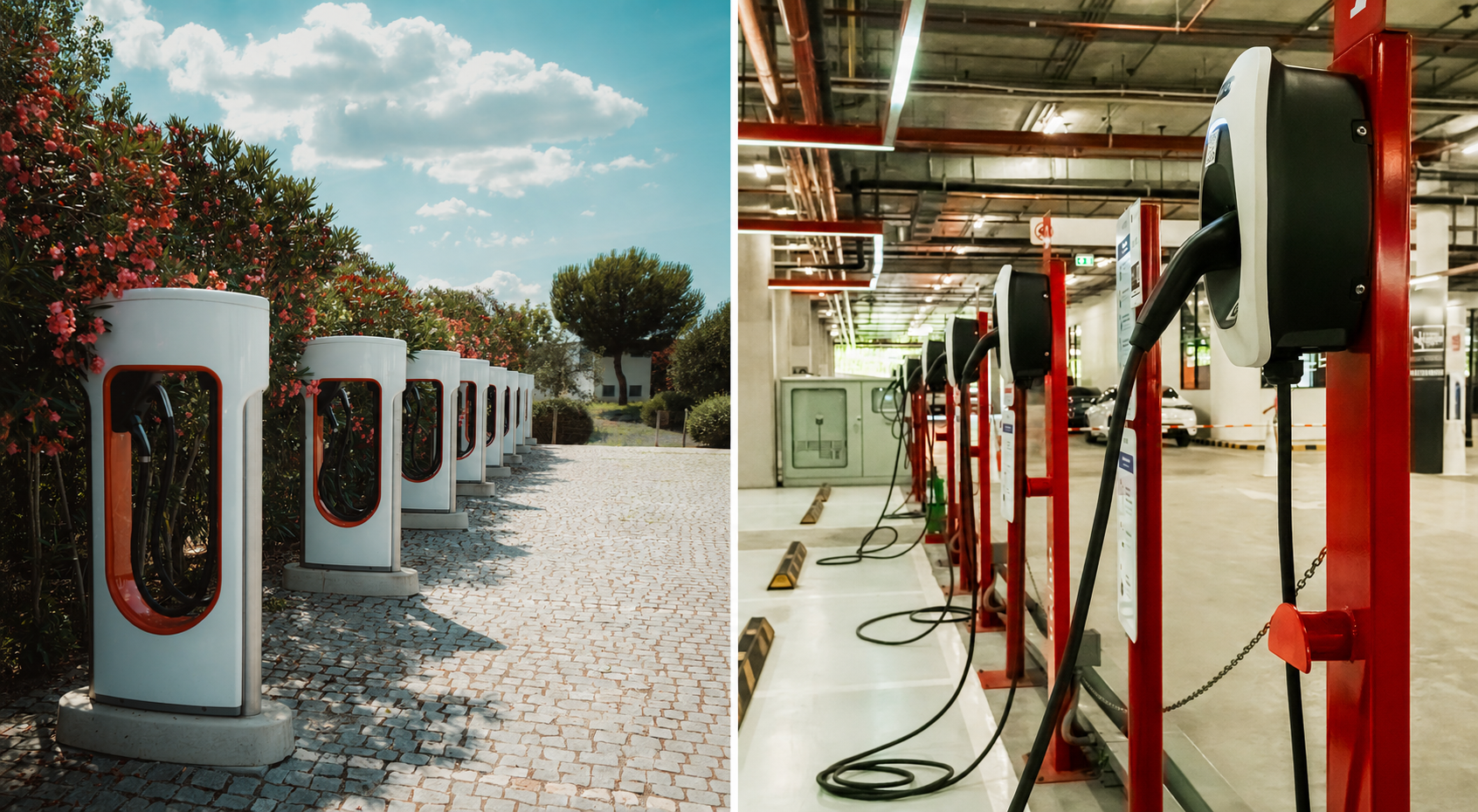
Relevant factors can include:
- whether the charger is indoors or outdoors
- ventilation conditions
- distance between vehicles
- proximity to other critical assets
- combustible materials nearby
- evacuation routes
- emergency-service access
- direct solar exposure
- typical ambient temperatures
From a technology perspective, these differences matter as well.
The correct sensor location, alarm logic, sampling frequency and definition of abnormal behaviour may change depending on the physical context of the installation.
This is one of the reasons why industrial monitoring should not be approached as a simple hardware deployment.
The solution needs to be designed around the asset, its operating conditions and its environment.
Can high summer temperatures increase thermal stress?
Ambient conditions are another relevant part of the thermal picture.
This does not mean that an electric vehicle or charging station will catch fire simply because it is operating on a hot day. Nor should a direct relationship between summer and EV fires be claimed without supporting statistical evidence.
However, temperature is a critical parameter in battery and power-electronics operation.
Research from the U.S. Department of Energy into extreme fast charging highlights the significant amount of heat that can be generated during high-rate charging and the importance of effective thermal management. The same research notes that temperature strongly affects battery performance, life and safety.
During warmer periods, several thermal factors can coincide:
higher ambient temperatures
direct solar exposure
higher starting temperatures inside outdoor electrical cabinets
high-power charging sessions
greater demand on cooling and ventilation systems
reduced thermal margin before abnormal conditions are reached
From an industrial monitoring perspective, this makes context particularly important.
A monitoring system should not only detect an absolute temperature value. It should help determine whether that temperature is normal under current conditions or whether the asset is behaving unusually.
For example, a certain cabinet temperature may be expected on a hot afternoon. A rapid increase compared with the historical behaviour of that same asset, however, may deserve attention.
This is where the combination of sensing, historical information, environmental context and data processing becomes far more powerful than a simple fixed-threshold alarm.
Vehicle fires and charging infrastructure fires are different
It is useful to distinguish between two different scenarios.
The first involves the electric vehicle itself, particularly its high-voltage battery.
The second involves the infrastructure delivering power to that vehicle.
Although both belong to the broader field of EV fire safety, their possible causes, behaviour and detection strategies may differ.
Vehicle-related systems may focus on variables such as:
- battery temperature
- gases
- smoke
- battery-management information
- abnormal cell behaviour
For charging infrastructure, monitoring may focus more directly on:
- electrical cabinets
- power connections
- converters
- rectifiers
- electronic components
- enclosures
- cooling systems
Continuous thermal monitoring can therefore reveal information that periodic inspections cannot provide.
A recent incident highlights why context matters
Recent incidents also show why it is important to avoid jumping to conclusions based solely on what is visible at the end of an event.
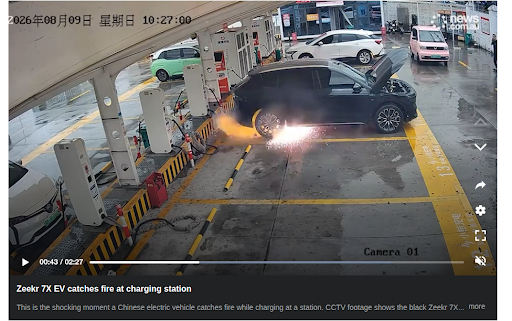
In August 2026, dramatic footage circulated showing an electric vehicle catching fire at a charging location. The video attracted attention because of the rapid development of the fire and the intensity of the images.
For an industrial monitoring strategy, however, the most relevant lesson is not to assume that the presence of a vehicle at a charger automatically identifies the cause of the incident.
A fire can be influenced by multiple factors, including the condition of the asset, previous damage, electrical systems, battery condition, environmental conditions or another technical failure.
This is why contextual data matters.
Historical temperatures, previous alarms, equipment status, operating conditions and the evolution of the event can help operators understand what was happening before the visible fire developed.
The dramatic video of the electric vehicle fire at a charging location published by news.com.au can be used as a current visual example of why monitoring and traceability are relevant.
The article should not use this incident as proof that charging, hot weather or a specific technology caused the fire unless that causal relationship is officially established.
Fire detection and fire suppression are complementary
Fire detection and fire suppression perform different functions.
A suppression system physically acts on the fire.
A monitoring system can:
- detect abnormal behaviour
- record the event
- generate an alarm
- notify a control centre
- track incident development
- continue monitoring after an intervention
The two technologies can therefore complement each other.
For example, a thermal monitoring system may identify rising temperatures before the activation point of an automatic suppression system is reached.
It can also continue collecting information afterwards.
This allows the operator to understand whether the temperature:
- continues to rise
- remains stable
- starts to decrease
- rises again after an initial reduction
That information can significantly improve situational awareness during an incident.
From sensing to decision-making: an end-to-end technology architecture
Detecting a temperature increase is only the beginning.
In an industrial project, the real value appears when data can move through the entire technology chain and become actionable information.
An end-to-end architecture may include several layers.
Industrial sensing
The first step is understanding which physical variable needs to be measured and choosing the right sensing technology.
In this case, the main parameter is temperature.
In other industrial use cases, relevant parameters could include:
- gases
- humidity
- vibration
- pressure
- energy consumption
- electrical current
- noise
- flow
- air quality
The correct sensor depends on the environment, measurement range, required accuracy, sampling frequency and installation conditions.
This means that the starting point should not be a specific device.
The starting point should always be the operational problem that needs to be solved.
Edge and IoT processing
The sensor data must then be collected by a device capable of processing it.
Local logic can identify significant events without relying exclusively on a remote platform.
For example, edge processing may detect:
- sudden temperature increases
- threshold violations
- abnormal trends
- sensor failures
- communications problems
This can be particularly relevant in critical applications where waiting for the next standard reporting interval may delay an alarm.
Edge processing therefore turns a measurement device into a local decision point.
Connectivity
The information then needs to be transmitted.
Different technologies may be used depending on the site:
- cellular networks
- Ethernet
- Wi-Fi
- LPWAN technologies
- industrial protocols
- site-specific communications
For remote charging stations, cellular connectivity can be particularly useful because it makes it possible to communicate without depending entirely on existing local network infrastructure.
This becomes increasingly important as the number of remote assets grows.
Device management
Once the deployment moves beyond a few devices, remote management becomes essential.
Operators need to know:
- which devices are active
- where they are located
- whether they have connectivity
- whether sensors are operating correctly
- when the last measurement was received
- whether configurations need to be changed
- whether remote updates are required
This layer is fundamental for moving from a pilot to an industrial-scale deployment.
Data platform
A central platform can aggregate information from all monitored assets.
It can support:
- data visualisation
- historical analysis
- dashboards
- alarms
- device status
- mapping
- event management
Instead of looking at individual sensors, operators gain visibility across the complete infrastructure.
System integration
The IoT platform does not need to be the final destination of the information.
In many industrial organisations, the most important operational systems already exist.
The monitoring architecture can therefore integrate with:
- control centres
- SCADA systems
- maintenance platforms
- asset management software
- security systems
- enterprise applications
- proprietary backends
The objective is not to create another isolated application.
The objective is to make relevant data available where operational decisions are already being made.
Analytics and technology consulting
Once data accumulates over time, new possibilities emerge.
The information can move beyond alarm management and support:
- asset comparison
- pattern recognition
- anomaly detection
- maintenance optimisation
- predictive models
- operational improvement
This is where the role of technology consulting becomes particularly important.
There is no single architecture that fits every industrial site. Sensor selection, connectivity, alarm rules, integrations and analytics must be adapted to the characteristics of the asset and the organisation.
The real value therefore comes from being able to combine industrial sensing, IoT, edge computing, communications, software, data management, integration and consulting into a coherent solution.
Temperature sensors for overheating detection
Industrial temperature probes can be used to monitor electrical cabinets and other critical components.
One technology commonly used in industrial environments is the PT100 resistance temperature sensor.
These sensors can provide stable and accurate measurements across broad temperature ranges, making them suitable for demanding monitoring applications.
However, selecting the correct sensor is only part of the challenge. Installation is equally important.
A probe may be attached directly to a metal surface or positioned close to a critical component. This makes it possible to use thermal conduction to identify changes in the enclosure or chassis more directly.
The goal is not simply to measure ambient air temperature. The objective is to detect thermal behaviour that may indicate that something is changing inside the equipment.
Continuous monitoring versus isolated measurements
A single temperature reading provides limited information. A time series provides much more.
Continuous monitoring can reveal:
progressive increases
sudden changes
abnormal values
unusual trends
repeated patterns
cooling after an intervention
This allows the system to work with behaviour, not just absolute values.
A high temperature may be normal for a particular component under a particular load. A rapid increase relative to the asset’s normal operating profile may be far more significant.
Adding contextual variables such as outdoor temperature, solar exposure or load can make that analysis even more useful.
Multi-level temperature alarms
A system based only on two states — normal and fire — provides limited context.
A more advanced strategy can use several alarm levels.
For example:
abnormal behaviour
preventive warning
high-risk alarm
critical event
fire protection system activation
The exact thresholds need to be adapted to each installation.
There is no single temperature value that is appropriate for every charger or electrical cabinet.
Alarm logic may depend on:
normal operating temperature
installed equipment
power level
cabinet design
ventilation
environmental conditions
outdoor temperature
manufacturer recommendations
safety procedures
The objective is to understand how the event is evolving, rather than waiting for a single critical threshold to be exceeded.
What happens when temperature starts to rise?
A possible operational workflow could be:
Different organisations may define different workflows.
The technology should adapt to the operational process rather than forcing the organisation to change its procedures around the technology.
Connectivity from remote charging stations
Charging infrastructure is often geographically distributed.
This creates an operational challenge.
A local communications network may not always be available, and deploying additional infrastructure simply to transmit a limited number of sensor readings may not be practical.
IoT devices with cellular connectivity can send measurements and alarms directly to a central platform.
This allows operators to manage chargers and electrical cabinets across many different locations from the same environment.
Connecting remote assets is one of the areas where IoT can provide particularly strong value in industrial applications.
What happens if power fails?
An electrical incident may cause a power outage.
This is precisely when monitoring can become most valuable.
For this reason, monitoring architectures can include backup power.
The objective is to temporarily maintain:
- Sensing
- Local processing
- Data storage
- Communications
- Alarm transmission
Resilience should therefore form part of the initial system design.
A monitoring solution should not only work when the infrastructure is operating normally.
It should also consider what happens when the infrastructure itself begins to fail.
Centralised management of multiple charging stations
As the number of charging stations increases, managing each asset individually becomes impractical. A central platform can provide a complete overview of the infrastructure.
Operators may be able to access:
- Asset location
- Current Temperature
- Historical trends
- Alarms
- Device status
- Connectivity
- Sensor health
- Thermal evolution
Dashboards and maps can help operations teams understand what is happening across an entire charging network without physically visiting every location
Integration with the operator's technology ecosystem
Most industrial organisations already use multiple operational systems. Any new monitoring solution needs to coexist with them. Interoperability should therefore be considered from the beginning.
Data and alarms may be forwarded to:
- control centres
- maintenance software
- asset management platforms
- security systems
- SCADA platforms
- enterprise applications
The objective is not to force operators to work inside an isolated IoT platform.
The objective is to deliver the relevant information to the systems where decisions are actually taken.
Post-Incident Thermal Monitoring and Hysteresis
Understanding post-event thermal behavior is critical to confirm stabilization and prevent false recovery conditions.
From fire safety to predictive maintenance
Cybersecurity for connected industrial infrastructure
The same sensing infrastructure can generate value beyond the original fire-safety use case. Historical temperature data can be used to compare equipment and identify long-term trends. For example, an electrical cabinet that gradually begins operating at higher temperatures than similar assets may indicate an emerging issue.
Possible causes could include:
- degraded components
- insufficient ventilation
- increased electrical load
- defective connections
- reduced cooling efficiency
The situation may not yet represent a fire risk.
However, the data could justify a maintenance inspection before the problem becomes more serious.
This allows monitoring to evolve from fire safety into preventive and predictive maintenance.
As industrial assets become more connected, cybersecurity becomes part of the architecture.
Monitoring systems should consider:
- encrypted communications
- device authentication
- user and access management
- secure remote updates
- traceability
- protected APIs
Physical safety and cybersecurity are increasingly interconnected.
A connected architecture needs to protect both the asset itself and the information generated by that asset.
Beyond EV charging stations
The same technology approach can be applied to many other industrial environments.
Examples include:
- Wind turbines
- Solar power plants
- Industrial electrical cabinets
- Transformer stations
- Battery energy storage system
- Telecommunications infraestructure
- Pumping stations
- Logistics centers
- Remote critical infrastructure
The measured parameter may change. In one project it may be temperature. In another it may be vibration, gases, pressure, energy consumption, water quality or air quality.
But the technology chain remains similar:
understand the environment → sense → process → connect → contextualise → integrate → decide.
This is why the same end-to-end technology capability can support very different industrial use cases.
How to choose a fire detection solution for EV charging stations
Before implementing a solution, several questions should be considered:
These questions show why an industrial project should not be approached only from a sensing perspective.
The technology architecture needs to be designed around the operational problem, the environment and the organisation’s existing systems.
From a physical measurement to an operational decision
Fire detection in EV charging stations is a good example of how an industrial challenge can be addressed through an end-to-end technology approach.
Everything begins with an asset operating in a specific environment and a physical variable: temperature.
But for that data to become valuable, it must move through a complete chain:
environment → measure → process → transmit → store → contextualise → interpret → alert → integrate → act.
Each stage may require different technologies and expertise.
This is why industrial projects can benefit from combining technology consulting, industrial sensing, IoT, edge computing, connectivity, data platforms, systems integration and analytics.
In one project, the objective may be to detect a potential fire.
In another, it may be to anticipate equipment failure, reduce maintenance visits, improve asset availability or better understand how infrastructure is operating.
The technology may change, but the principle remains the same: connect the physical and digital worlds to transform data into better decisions for industrial infrastructure.
Behind the Change.
Beyond the Challenge.